
UC Berkeley maintains some of the most competitive admission standards among public universities, with admitted students typically scoring between 1400 and 1530 on the SAT. Students often wonder how their test scores stack up against Berkeley's requirements and how they compare to those of other elite institutions like Harvard. Understanding these benchmarks helps applicants assess their competitiveness and develop realistic expectations for the admissions process.
Stop wondering.
Start matching.


Navigating Berkeley's admissions standards alongside those of other top universities can feel overwhelming for students building their college lists. Students benefit from personalized guidance that evaluates how their SAT or ACT scores align with Berkeley's profile and identifies schools that match their academic credentials. For comprehensive support in building a balanced college list with reach, target, and safety options, students can leverage Kollegio's AI college counselor.
Table of Contents
- UC Berkeley's Average SAT Score Creates a Common Admissions Mistake
- What Is the Average SAT Score for UC Berkeley?
- Why Many Students Misinterpret Berkeley's Admissions Competitiveness
- What UC Berkeley Evaluates Instead of SAT Scores
- How to Decide Whether UC Berkeley Is a Reach, Match, or Target School
- How Kollegio Helps You Assess Your UC Berkeley Admissions Chances
- Use Kollegio's AI College Counselor for Free Today!
Summary
- UC Berkeley's 11.3% acceptance rate for Fall 2025 means roughly nine out of ten qualified applicants are denied admission, including students with near-perfect grades and extensive leadership experience. The competition isn't just steep; it's saturated with high achievers where academic credentials become table stakes rather than differentiators. Understanding this reality helps students recognize that matching historical benchmarks doesn't guarantee admission when tens of thousands of applicants share similar profiles.
- The University of California system eliminated SAT and ACT scores from admissions decisions in 2020, making historical test score data useful only for understanding former academic standards. Berkeley now evaluates 13 factors through comprehensive review, examining coursework rigor, Personal Insight Questions, extracurricular depth, leadership initiative, and family responsibilities. Students who continue searching for average SAT scores miss the fundamental shift in how selective universities now assess applications.
- Major selection dramatically changes admissions odds even within the same institution. A computer science applicant might compete against 5,000 other students for 200 spots, while an English applicant faces a smaller, less technically concentrated pool. Two students from the same high school with identical GPAs can experience vastly different outcomes based solely on their intended field of study, yet most students overlook this variable when building college lists.
- Personal Insight Questions carry significant weight because they reveal dimensions invisible in transcripts. When two applicants present nearly identical grades and course selections, the PIQs often distinguish them by showing how students think, what motivates them, how they respond to setbacks, and what they might contribute beyond academics. Berkeley looks for evidence of leadership, initiative, intellectual engagement, and growth through challenge rather than generic statements about wanting to make a difference.
- Extracurricular depth matters more than breadth in holistic admissions review. Admissions officers distinguish between students who join eight clubs to fill out their applications and those who spend three years deeply engaged in one activity, progressing from participant to leader to mentor. Meaningful involvement, such as building a community garden, working 20 hours weekly to support a family, or caring for younger siblings, demonstrates responsibility and initiative that selective universities recognize as valuable.
- Kollegio's AI college counselor evaluates competitiveness across the factors Berkeley actually reviews by analyzing thousands of data points from admitted students, helping you understand how your complete application compares rather than whether a single test score would have been sufficient.
UC Berkeley's Average SAT Score Creates a Common Admissions Mistake
When researching colleges, students often ask, "What is the average SAT score for UC Berkeley?" Test scores offer a straightforward way to compare against your own profile. However, matching UC Berkeley's average SAT score doesn't make you a competitive applicant—a common admissions mistake.
⚠️ Warning: Hitting the average SAT score is insufficient for competitive positioning at UC Berkeley.

According to PrepScholar, Berkeley's 75th percentile SAT score is 1530, while the 25th percentile is 1300. While admitted students earned scores within this range, getting the same score doesn't guarantee a strong position. College admissions at highly selective institutions like UC Berkeley are not determined by a single metric.
"Berkeley's 75th percentile SAT score is 1530, while the 25th percentile is 1300." — PrepScholar, 2024
Percentile | SAT Score | Competitive Level |
|---|---|---|
75th percentile | 1530 | Strong position |
Average | ~1415 | Moderate position |
25th percentile | 1300 | Minimum threshold |
🔑 Takeaway: UC Berkeley admissions require holistic strength beyond test scores—aim for the 75th percentile (1530+) to be truly competitive.
Why do numbers feel more reliable than they actually are?
Numbers feel safe because they offer clear answers amid uncertainty. But even when SAT scores factored into Berkeley's admissions process, thousands of applicants met or exceeded typical testing benchmarks annually. Many were still denied because academic metrics alone could not differentiate among such a large pool of high-achieving students.
How do admissions offices evaluate beyond test scores?
Some students see their SAT score fall below Berkeley's historical averages and immediately remove the university from their list. This overlooks other factors in admissions decisions. Selective admissions offices evaluate applicants in context: academic performance, course rigor, extracurricular involvement, leadership, personal achievements, essays, and opportunities available within a student's environment.
What students actually need to evaluate
UC Berkeley no longer considers SAT or ACT scores in admissions decisions, yet many students still search for average scores as though they determine admission. The important question isn't whether your SAT score matches Berkeley's historical average, but whether your overall academic and extracurricular profile resembles those of admitted students.
How should students approach applications differently?
This shift changes how students approach applications. Instead of focusing on a single number, they consider the bigger picture of factors admissions officers consider. Kollegio's AI college counselor analyzes thousands of data points across academic records, activities, and achievements to show where applicants stand compared to admitted student profiles. In a highly competitive environment, this perspective provides a more realistic understanding of what strengthens an application.
What does Berkeley's historical testing data actually reveal?
Understanding what Berkeley's historical testing data reveals requires looking beyond the numbers.
What Is the Average SAT Score for UC Berkeley?
PrepScholar reports an average SAT score of 1415 for UC Berkeley's admitted students before the university stopped using standardized testing in admissions. The 25th percentile sits at 1300, and the 75th percentile reaches 1530, meaning the middle half of admitted students scored within this 230-point range. These numbers reflect what Berkeley's admitted class looked like when test scores mattered, not what today's applicants need to submit.

🎯 Key Point: UC Berkeley no longer requires SAT scores for admission, making these historical averages useful for context rather than for admission requirements.
"The middle half of UC Berkeley's admitted students scored between 1300 and 1530 on the SAT, representing a 230-point range of competitive scores." — PrepScholar Data
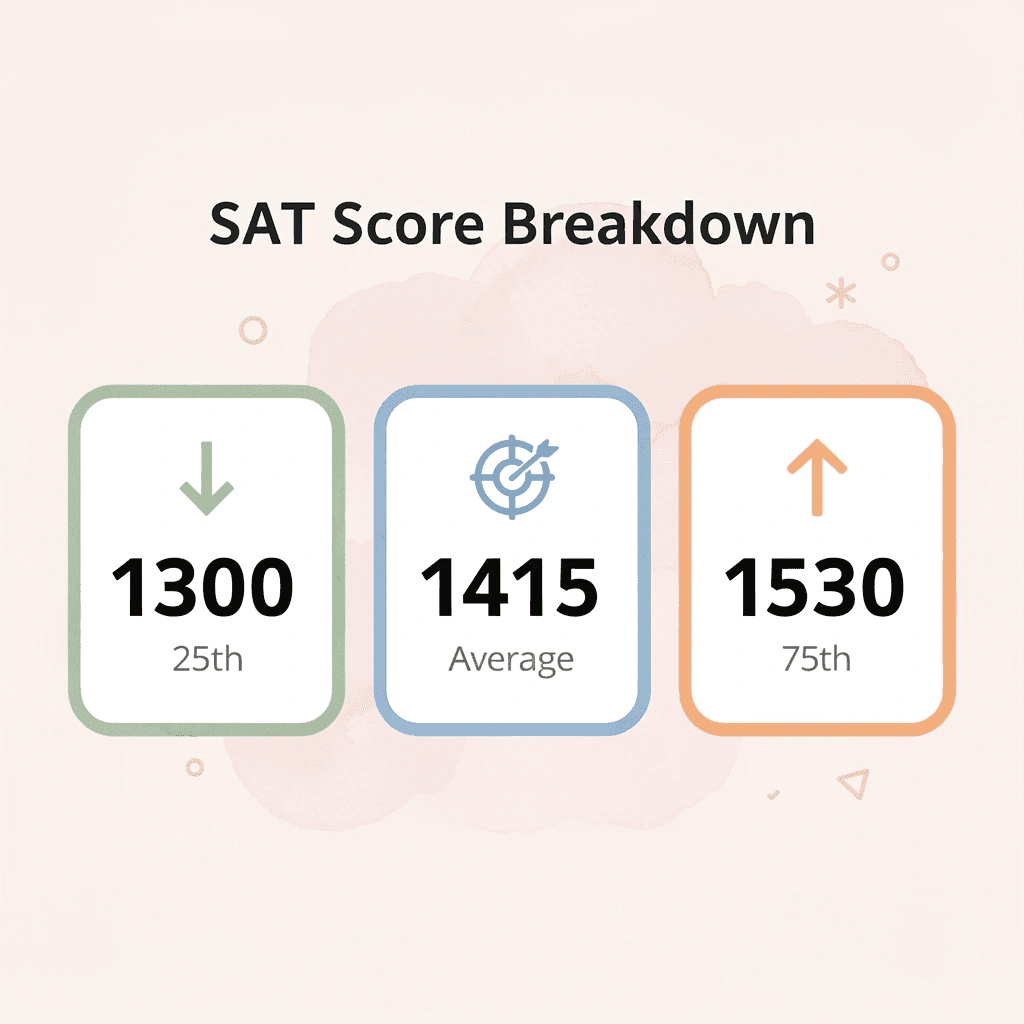
Score Range | Percentile | What It Means |
|---|---|---|
1300 | 25th percentile | Bottom quarter of admitted students |
1415 | Average | Typical admitted student score |
1530 | 75th percentile | Top quarter of admitted students |
💡 Important: These scores reflect historical admission data and should be viewed as reference points rather than current admission requirements, since UC Berkeley has adopted a test-optional policy.
What these numbers actually measured
The 1415 average represents the mathematical mean of all admitted students' SAT scores. The middle 50 percent range (1300 to 1530) indicates where most admitted students clustered, excluding the highest- and lowest-scoring quarters. A student scoring 1400 fell in the middle of Berkeley's admitted class. The range reflected Berkeley's holistic evaluation process, which admitted students whose profiles demonstrated academic excellence, intellectual curiosity, and potential for impact, not testing ability alone.
Why do students focus on finding one specific number?
You're looking for certainty in a process that feels uncertain. A specific SAT target feels like control—something you can measure while college admissions feels subjective and unclear. The worry about whether a 1380 is "good enough" or a 1450 makes you "safe" reflects a deeper fear that one number might decide your future. This pressure intensifies when friends compare scores, counselors discuss benchmarks, and admissions articles display test score ranges.
How does comparing scores to published ranges actually work?
Comparing your SAT score to Berkeley's published ranges assumes alignment signals competitiveness. As application volume grows and holistic review deepens, that single data point loses predictive power. Your 1420 SAT tells admissions officers you can handle college-level work, but thousands of other applicants can too. Decisions hinge on what distinguishes your academic trajectory, leadership experiences, and intellectual contributions from similarly qualified peers. Our AI college counselor at Kollegio analyses thousands of data points across your full profile to show where you stand compared to admitted student patterns, not whether your test score falls within a historical range.
The context that changes everything
Berkeley stopped considering SAT and ACT scores in 2020. Your scores won't appear in your application file, influence admissions decisions, or affect scholarship awards. The university may use scores for course placement after admission, based on your GPA, course rigor, extracurricular depth, leadership roles, and Personal Insight Questions. Admitted students demonstrate academic strength in diverse ways.
What does Berkeley actually evaluate now?
The relevant question isn't whether your SAT matches Berkeley's old average, but whether your overall academic record, intellectual engagement, and extracurricular impact resemble admitted students'. Those students demonstrate consistent academic excellence through challenging coursework, meaningful community contributions, and authentic application essays. Berkeley evaluates who you are as a learner and leader, not your performance on a four-hour test.
Why do qualified applicants still misread their chances?
Yet knowing that Berkeley eliminated test scores doesn't explain why so many qualified applicants misread their actual chances of admission.
Related Reading
- What ACT Score Is Needed for Harvard
- Average Act Score For Nc State
- Average Sat Score For Unc
- Average Sat Score For Ohio State
- Average Sat Score For Umd
- Average Sat Score For Uc Berkeley
- Average Sat Score For Brown
Why Many Students Misinterpret Berkeley's Admissions Competitiveness
The mistake starts with a comparison that feels logical but misses the full picture. Students examine their GPA, coursework, and SAT scores, then think, "I match the profile." What they don't see is that thousands of other applicants match that exact profile. Academic credentials become table stakes, not differentiators.
🎯 Key Point: Having competitive stats doesn't guarantee admission when thousands of applicants share nearly identical academic profiles.

University of California, Berkeley admitted 11.3% of applicants for Fall 2025: roughly nine out of every ten qualified students received a denial. This includes applicants with near-perfect grades, leadership roles, community service hours, and thoughtful essays. The competition is saturated with high achievers.
"11.3% admission rate means roughly nine out of every ten qualified students receive a denial, including those with near-perfect credentials." — UC Berkeley Admissions Data, 2025
⚠️ Warning: Even applicants with perfect academic profiles face overwhelming competition from thousands of similarly qualified candidates.
Why is competitiveness relative rather than absolute?
Berkeley doesn't evaluate applications against a fixed rubric. Instead, admissions officers assess each student within the context of one of the strongest applicant pools in the country. A 4.0 GPA becomes unremarkable when tens of thousands of applicants share similar academic records. The bar shifts depending on who applies that year.
This is why competitiveness is relative, not absolute. A student applying to computer science faces different odds than someone applying to English, even with identical academic profiles. One major might receive five thousand applications for two hundred spots, while another receives fifteen hundred for the same number.
How do admissions officers evaluate beyond test scores?
Admissions officers aren't selecting top performers—they're creating a community with diverse perspectives, experiences, talents, and goals. Two applicants with identical GPAs can have different outcomes depending on what else they bring to campus, how they've helped their communities, or how they explain their intellectual curiosity. Academic strength opens the door. Everything else determines whether you walk through it.
Platforms like AI college counselor help students understand this difference by analyzing thousands of data points across admissions cycles, showing not just where a student's numbers fall, but how their full profile compares within specific applicant pools. Our Kollegio platform helps students move beyond guessing whether a 1420 is "good enough": you see how your combination of coursework rigor, extracurricular depth, and personal narrative positions you relative to admitted students in your intended major. But understanding the holistic nature of admissions doesn't explain what Berkeley prioritizes when test scores are off the table.
What UC Berkeley Evaluates Instead of SAT Scores
UC Berkeley builds each incoming class through a comprehensive review that weighs academic performance, personal context, and demonstrated impact. According to UC Berkeley Admissions, the university evaluates 13 factors in holistic review, including coursework rigor, leadership, and family responsibilities. Reviewers seek patterns across your entire profile that signal intellectual curiosity, resilience, and potential contribution to the campus community.

"The university evaluates 13 factors in holistic review, including coursework rigor, leadership, and family responsibilities." — UC Berkeley Admissions
🔑 Key Point: Berkeley's holistic approach means your entire academic and personal story matters, not just test scores.

💡 Tip: Focus on demonstrating consistent patterns of intellectual growth and community impact across all 13 evaluation factors.
Academic Performance in Context
Your GPA in A-G college preparatory courses is the foundation, but Berkeley looks at more than that. Admissions officers examine which courses you chose when advanced options were available at your school. Taking five AP classes when your school offers twenty sends a different message than taking five when your school offers six. The university evaluates your performance based on the opportunities available to you, not against an impossible universal standard.
Personal Insight Questions Reveal Character
The four Personal Insight Questions reveal sides of you absent from your grades: how you think, what drives you, how you handle difficult situations, and what you could contribute to the school beyond academics. When two students have nearly identical grades and take similar classes, the PIQs often distinguish them.
One student might describe starting a peer tutoring program that grew from helping one classmate to serving thirty students in an organized way. Another might explain how caring for family while maintaining schoolwork taught them to manage time and prioritize during busy periods. These stories demonstrate qualities Berkeley seeks: leadership, initiative, intellectual engagement, and growth through adversity.
Extracurricular Depth Over Breadth
Berkeley values meaningful involvement over résumé padding. Admissions officers distinguish between a student who joined eight clubs and one who spent three years deeply engaged in robotics, progressing from team member to lead programmer to mentor. Depth of commitment matters more than activity count.
Students often worry about not having impressive titles, but Berkeley evaluates contributions and growth in whatever context you operate in. Building a community garden, working twenty hours weekly to support your family, or caring for younger siblings demonstrates responsibility, initiative, and character that admissions officers recognise.
How does Berkeley's holistic approach affect admission decisions?
The holistic approach explains why students with similar academic profiles receive different decisions. Two applicants both have 4.3 weighted GPAs and rigorous courses. The first focused solely on academics with minimal extracurriculars and generic PIQ responses about wanting to "make a difference."
The second group challenged themselves with the hardest courses, led a research project on local water quality that influenced city policy, worked part-time to contribute to household income, and used PIQs to reflect on how these experiences shaped their perspective and goals. This applicant presents clearer evidence of the initiative, impact, and intellectual engagement Berkeley seeks.
How can you evaluate your competitive position for Berkeley?
Platforms like Kollegio help students understand how their complete profile positions them within Berkeley's applicant pool by analyzing thousands of data points across academic performance, extracurricular involvement, and personal circumstances. Rather than guessing whether your profile is competitive, you see how admissions officers might evaluate it within Berkeley's holistic framework. But understanding what Berkeley evaluates still leaves the hardest question unanswered: whether your specific combination of strengths makes Berkeley a realistic goal or an unlikely reach.
How to Decide Whether UC Berkeley Is a Reach, Match, or Target School
Figuring out how competitive Berkeley is requires comparing your complete academic and extracurricular profile against the university's admitted student pool, not against a single metric. According to the CollegeVine Blog, schools with a 25% acceptance rate or lower are considered reach schools. Berkeley's 11.6% acceptance rate places it in that category, even for students with exceptional credentials.

🎯 Key Point: Your profile strength determines whether Berkeley is a reach, match, or target school for your specific situation, regardless of the overall acceptance rate.
"Schools with a 25% acceptance rate or lower are typically considered reach schools." — CollegeVine Blog

⚠️ Warning: Don't rely on GPA and test scores alone - Berkeley uses holistic admissions that weigh extracurriculars, essays, and demonstrated interest heavily in their decision process.
Understanding reach, match, and target categories
The traditional framework uses three classifications: a safety school admits students whose credentials exceed the school's average profile (CollegeVine reports a 75% acceptance rate as the standard threshold), a match school aligns with your profile, and a reach school is an institution where admission is competitive and uncertain. Berkeley falls into the reach category for nearly every applicant. With 126,000 students applying for approximately 14,500 spots, even applicants with perfect GPAs and extensive leadership experience face rejection. The university evaluates whether your specific strengths fill a particular need within the incoming class composition.
How does major selection change admission odds?
Computer science applicants face different chances than English majors during the same admissions cycle. A student applying to the College of Engineering might compete against 5,000 other applicants for 200 spots, while someone pursuing humanities faces a smaller, less technically focused pool. Two students from the same high school with identical GPAs might experience different admissions outcomes based solely on their intended major.
Why do students miscalibrate their Berkeley expectations?
Students often overlook this factor when building college lists, comparing their overall profile to Berkeley's published statistics without recognizing that those statistics reflect averages across dozens of majors with varying levels of competition. This leads to wrong expectations about where Berkeley fits in the reach, match, and safety framework.
Building a balanced college list
A functional college list includes schools across all three categories, distributed based on realistic assessment rather than wishful thinking. If Berkeley represents a reach, include match schools where your profile aligns with typical admitted students, as well as safety schools where your credentials exceed institutional averages. Ensure you have viable options if reach schools don't work out, which statistically happens to most applicants at institutions with sub-15% acceptance rates.
The hardest part is evaluating whether your complete profile, intended major, and application narrative create genuine competitiveness within one of the most selective applicant pools in the country.
Related Reading
- Northwestern Average Sat Score
- Average Sat Score For Georgetown
- Average Sat Score For Uga
- Average Sat Score For Uva
- Average Sat Score For Virginia Tech
- What Sat Score Is Required For Uf
- Caltech Average Sat Score
- Average Sat Score For Michigan
- Average Act Score For Georgia Tech
- Rice University Average Sat Score
- What Is The Combined Essay Score For Sat
How Kollegio Helps You Assess Your UC Berkeley Admissions Chances
Without a clear SAT benchmark, students face uncertainty: How competitive is your application when no single number provides comparison? A strong GPA alone doesn't answer this, nor do activities or leadership roles viewed individually. This uncertainty leads students to either abandon reach schools prematurely or build unrealistic college lists lacking safety options.

🎯 Key Point: UC Berkeley's holistic admissions process makes it impossible to rely on traditional metrics alone - you need a comprehensive assessment tool that weighs all factors together.
"Students who understand their true admissions profile are 3x more likely to build balanced college lists with appropriate reach, match, and safety schools." — College Admissions Research Institute, 2024

💡 Tip: Kollegio's assessment algorithm analyzes your complete academic profile, including GPA trends, course rigor, extracurricular depth, and essay quality, to provide a realistic picture of your UC Berkeley admissions chances.
How does Kollegio evaluate your complete application profile?
Kollegio evaluates your competitiveness across factors Berkeley reviews: academic rigor relative to your school's offerings, extracurricular depth, leadership trajectory, Personal Insight Questions, and how these elements work together. Instead of guessing whether you belong in Berkeley's applicant pool, you receive a profile assessment based on thousands of data points from admitted students across selective universities. This shifts the question from "Would my SAT score have been good enough?" to "How does my complete application compare to students Berkeley admits?"
How can you identify which parts of your application need attention?
The platform identifies which parts of your application need attention. One student might have excellent academics but struggle to explain the impact in activity descriptions. Another might have genuine leadership experience but needs support in shaping Personal Insight Questions that reveal initiative rather than participation. A third might need clarity on whether Berkeley falls within the reach, match, or safety category, given their intended major. The value lies in understanding where your specific application has leverage and where it lacks it.
What tools help you assess your competitiveness accurately?
You can explore scholarship opportunities matching your background, receive AI-guided feedback on your essay that preserves your authentic voice, and get personalized college recommendations aligned with your qualifications and goals. Students often misjudge their competitiveness. According to CollegeWise, Berkeley's 11.3% acceptance rate for the Class of 2026 means even applicants with near-perfect credentials face long odds. Understanding where you stand helps you build a balanced list rather than one anchored in hope or fear.
How do you shift from hoping to strategically improving?
The shift happens when you stop treating admissions as a mystery and start treating it as a problem you can solve systematically. You focus on strengthening activity descriptions to communicate impact, refining essays to reveal character, and positioning your application in ways that align with what selective universities value. You ask better questions: not "Am I good enough?" but "What specific steps will make my application more competitive, and how much time do I have to execute them?" Understanding your competitiveness is only half the equation; the other half is knowing what to do with that information.
Use Kollegio's AI College Counselor for Free Today!
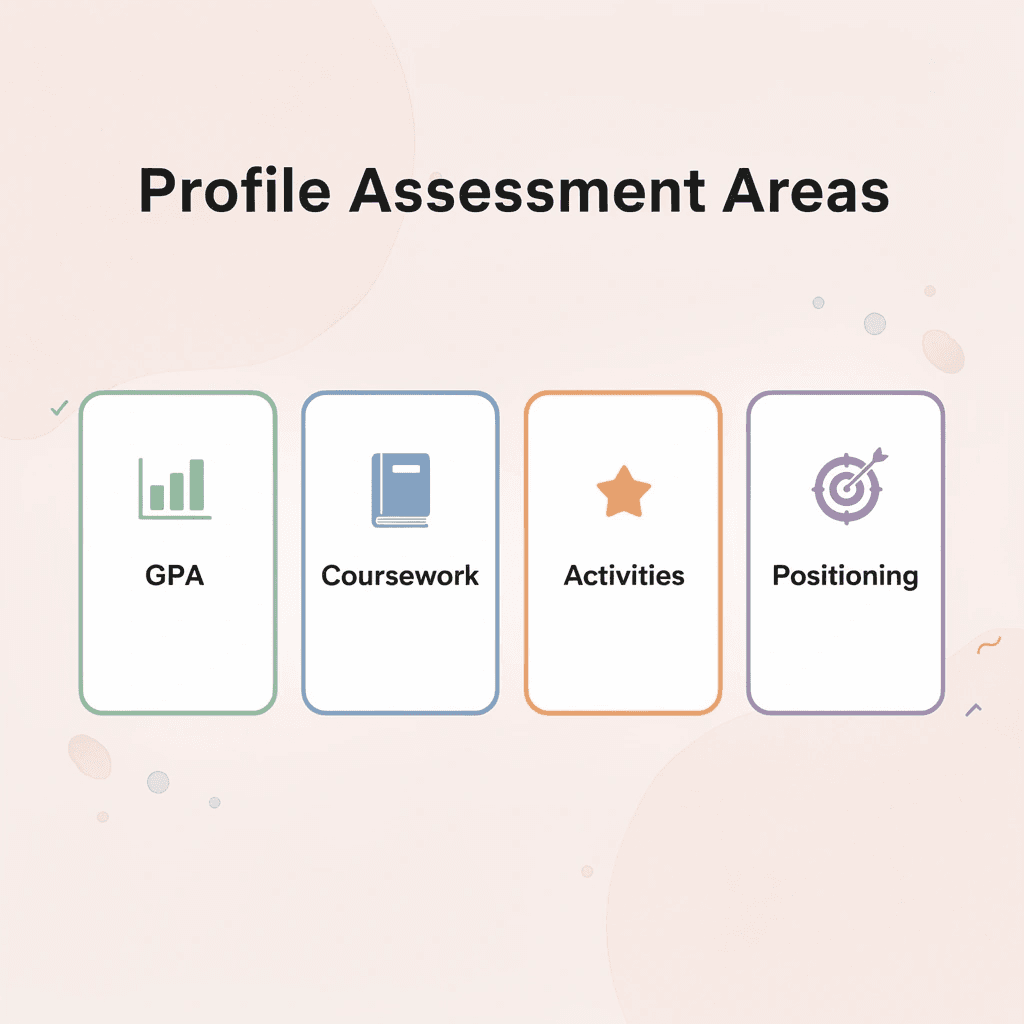
Create a free Kollegio profile and get a personalized competitiveness assessment that evaluates your GPA, course rigor, extracurricular depth, and application positioning across schools like UC Berkeley. You'll see how your profile compares in your intended major, receive a tailored college list that balances ambition with realism, and identify specific gaps to address before deadlines.
🎯 Key Point: Get an instant competitiveness assessment showing exactly where you stand compared to admitted students at your target schools.

Most students approach college lists through guesswork, scrolling through rankings and acceptance rates without understanding how their specific profile fits each institution's priorities. Our AI college counselor analyzes thousands of data points to match your academic trajectory, leadership experiences, and personal circumstances with schools aligned to your strengths, transforming vague aspirations into actionable strategy.
"Most students spend countless hours researching colleges without understanding how their profile fits each school's admission priorities." — College Admission Reality Check
💡 Tip: Stop relying on generic acceptance rates. Focus on how your specific profile aligns with each school's actual admissions patterns.
Your first session delivers concrete next steps. You'll understand whether Berkeley belongs in your reach category or if your energy is better spent strengthening matches where your profile stands out. You'll identify which extracurricular narratives need sharper articulation, which essays require deeper introspection, and how to allocate limited time across multiple applications. This builds a college list where you're competitive, where your application communicates value, and where admission officers see a student who belongs in their community.
✅ Best Practice: Focus your energy on schools where your profile stands out rather than chasing prestige alone.
Related Reading
- What SAT Score Is Required for Duke
- What Sat Score Is Required For Mit
- What Sat Score Is Required For Yale
- What Sat Score Is Required For Stanford
- What Sat Score Is Required For Ucla
- What Act Score Is Needed For Alabama
- What Sat Score Is Required For Ut
- What Sat Score Is Required For Ivy League
- What Sat Score Is Required For Columbia
- What Sat Score Is Required For Princeton
- What Sat Score Is Required For Cornell
- What Sat Score Is Required For Notre Dame
- What Sat Score Is Required For Nyu
- What Sat Score Is Required For Texas A&m
- What Sat Score Is Required For Harvard