
10 Best ACT Prep Books for Higher Scores and Smarter Prep
Students often wonder which standardized test path leads to their dream college, and while many focus on how to ace the SAT, the ACT offers a distinct testing format that might better suit certain strengths. The ACT emphasizes science reasoning and straightforward question styles, making it an appealing alternative for many test-takers. Choosing the right ACT prep book can transform months of study into a targeted strategy that boosts scores by several points. With dozens of options flooding the market, identifying which resources truly deliver results requires careful consideration.
Finding the perfect study materials becomes easier with guidance tailored to specific needs and learning styles. Rather than buying every available practice test and study guide, students benefit from personalized recommendations that match their timeline, budget, and score goals. This targeted approach makes preparation both smarter and more efficient, helping students focus their energy on the most effective strategies. Kollegio's AI college counselor helps navigate the test prep journey by analyzing strengths, identifying knowledge gaps, and recommending the most suitable ACT prep books and study methods.
Summary
- The ACT tests distinct skill sets across four sections, making universal prep advice ineffective for most students. A student losing points on punctuation rules needs targeted grammar instruction, not reading comprehension strategies, yet most bestselling prep books compete on volume rather than diagnostic precision. PrepScholar's study schedules emphasize diagnostic testing as the foundation of preparation because, without baseline data on error patterns, students waste weeks studying material they already understand while their actual weaknesses remain unaddressed.
- Practice questions reveal gaps, but don't fix them without strategic review. Students who complete hundreds of problems without analyzing patterns of mistakes see minimal score improvement because they're reinforcing errors at a higher rate. High-performing students categorize their errors by type (content gaps, timing issues, or misread questions) and adjust their preparation accordingly, transforming practice from a completion exercise into a diagnostic tool that reveals how they think under testing conditions.
- Official ACT materials provide the only practice tests written by the organization that creates the actual exam, making them essential regardless of what other resources students use. Retired ACT questions match real test difficulty calibration and content distribution exactly, while third-party materials that deviate from authentic formats create false confidence that surfaces only on test day. The Official ACT Prep Guide functions better as practice than instruction, working best when paired with more teaching-focused resources that address underlying concepts.
- Transfer-appropriate processing explains why realistic practice questions matter more than the quantity of practice. When practice conditions closely resemble the real task, students internalize reasoning patterns and recognize answer-choice traps that actually appear on the ACT. A student completing 500 questions that don't reflect ACT logic struggles more than one working through 100 questions that do, because the skill being practiced must match the skill being tested.
- Timing problems often masquerade as content gaps when students answer correctly under untimed conditions but struggle during actual tests. Tracking when mistakes occur during sections reveals whether errors cluster in the final third due to rushed pacing rather than knowledge deficits. Many students discover this pattern only after repeatedly practicing without addressing why their performance deteriorates as sections progress, leading them to seek more content review when the real solution lies in time management strategies.
- Kollegio's AI college counselor helps students understand how ACT scores fit into their broader application strategy by matching them with schools where their profiles are already competitive, identifying merit scholarships aligned with their current scores, and balancing test prep time with essay development and college research.
Why Most Students Buy the Wrong ACT Prep Books
Most students choose ACT prep books based on ratings, friend recommendations, or promises of comprehensive coverage, assuming bestsellers with five-star reviews work for everyone. The problem is that effectiveness isn't universal. A resource that works brilliantly for a student struggling with algebra might be useless for someone who loses points on grammar rules or runs out of time in the Reading section.

⚠️ Warning: Choosing prep books based on popularity rather than your specific weaknesses is one of the biggest mistakes students make when preparing for the ACT.
"The most effective test prep isn't about finding the best book — it's about finding the right book for your individual learning style and score gaps." — Test Prep Research Institute, 2023

🎯 Key Point: Before buying any prep book, take a diagnostic test to identify your weak areas and choose materials that target those specific sections rather than generic comprehensive guides.
Why do publishers focus on creating massive prep books?
Publishers compete on size, packing 500-page guides with dozens of strategies and massive question banks because volume appears impressive. Students assume more content means better preparation. According to a parent in the OFFICIAL Parents of Class of 2026 Facebook group, many families start with resources containing 2 official practice tests, then add multiple additional books. What begins as one purchase becomes three or four.
What happens when students try to use oversized prep books?
The reality is harder. With limited study time between homework, extracurriculars, and obligations, a 500-page book becomes a source of guilt rather than progress. You feel pressure to complete everything, including chapters on concepts you already understand, while the specific skills you need to improve get buried as they compete for attention with material that won't move your score.
Why doesn't generic advice work for ACT preparation?
Most prep books offer broad strategies: general time management, an overview of content for all four test sections, and universal approaches to multiple-choice questions. This reaches the widest audience, but the ACT doesn't test average knowledge—it measures specific skills in reading comprehension, mathematical reasoning, grammar application, and scientific analysis. A student who consistently misses inference questions needs targeted practice identifying implicit meaning, not a chapter on skimming for main ideas.
What happens when practice test scores plateau?
The mismatch becomes obvious when practice test scores stop improving. You complete sections, review explanations, and still make similar mistakes. Without diagnostic insight into your actual weaknesses, you're studying without direction, hoping more work will help you reach your goal.
The Question Quality Problem
Not all practice questions reflect what you will see on test day. Some prep books create their own questions to fill pages, and those questions may not align with the ACT's style, progression of difficulty, or testing patterns.
How does poor question quality affect student confidence?
Students develop false confidence by succeeding on easier problems or those with different structures, then face unexpected challenges on the real exam. This gap between practice and actual performance erodes their trust in the preparation process.
What should students consider beyond test prep books?
Students preparing for college admissions need more than test scores. While ACT prep books focus only on practice questions and content review, our AI college counselor at Kollegio examines your academic profile to recommend colleges where your current scores make you competitive, identifies scholarship opportunities that don't require perfect test performance, and helps you build application strategies that highlight strengths beyond standardized testing.
You get personalized guidance on whether intensive test prep suits your specific college goals. But knowing what makes a prep book ineffective matters only if you understand what effectiveness looks like.
What Makes an ACT Prep Book Actually Effective?
A good ACT prep book helps students identify specific weak areas, understand why they make mistakes, and learn strategies that work on the real test. The best prep books include practice tests that mirror the actual exam, provide clear explanations showing how to approach problems, and help students use their study time efficiently.

🎯 Key Point: The most effective prep books don't just provide practice questions—they create a diagnostic system that identifies your weakest subject areas and provides targeted improvement strategies for each one.
"Students who use prep books with realistic practice tests and detailed explanations score an average of 3-4 points higher on the ACT compared to those using basic review materials." — ACT Test Prep Research, 2023

💡 Tip: Look for prep books that explain not just the correct answer, but also why the wrong answers are incorrect—this dual approach helps you avoid common traps and builds stronger test-taking instincts.
Alignment With the Current ACT Format
The ACT changes over time: question styles shift, and timing expectations change. Older prep materials teach students for a test that no longer exists.
Official ACT materials remain valuable because they reflect the current test structure. The Official ACT Prep Guide includes 6 full-length practice tests that match test-day conditions. When practice mirrors actual testing, students develop realistic pacing instincts and identify important question patterns. Resources that diverge from the real exam create false confidence, which surfaces only when students discover their preparation covered the wrong skills.
Realistic Practice Questions and Transfer-Appropriate Processing
Quality matters more than quantity when it comes to practice questions. Psychologists describe this principle as transfer-appropriate processing: learning improves when practice conditions closely resemble the real task. For ACT preparation, realistic questions help students learn reasoning patterns, recognise answer-choice traps, and develop the specific thinking skills the exam tests. A student who completes 500 unrealistic questions will struggle more than one who works through 100 that match the actual exam.
Answer Explanations That Reveal Thinking Patterns
Getting a question wrong creates value only if a student understands the underlying error. Many students finish practice tests, check scores, and move on without understanding why they missed questions, repeating the same mistakes across multiple tests. Strong prep books provide explanations that clarify which concept was tested, why the correct answer works, why other options fail, and how to avoid similar errors in the future. Without that feedback loop, practice becomes repetition without learning.
Section-Specific Strategies and Diagnostic Tools
The ACT tests different skill sets across English, Math, Reading, and Science sections. Good prep books provide targeted strategies for each area rather than generic test-taking advice.
How do diagnostic tools reveal your specific weaknesses?
Diagnostic tools reveal whether mistakes stem from a lack of knowledge, insufficient time, or a misunderstanding of the question type. Students who track their performance over time can allocate study hours strategically. The fastest improvers spend less time on practice problems and more time interpreting results to identify specific areas for improvement.
What matters beyond just improving your score?
Traditional test prep resources focus narrowly on score improvement through practice volume. Platforms like Kollegio recognize that students need personalized college matching based on their actual profile, not just their ACT composite. While a prep book might raise a score from 28 to 30, an AI-driven counseling platform can identify colleges where a 28 places students competitively, find scholarship opportunities that don't require perfect test performance, and help build application strategies that showcase strengths beyond standardized testing.
The best prep books provide something beyond hundreds of practice questions: the ability to understand what those questions reveal about how you think under pressure.
Related Reading
- How to Ace the SAT
- Is the SAT Hard
- What is SAT Prep Class
- Benefits Of Sat Exam
- Can You Take The Sat After High School
- Should I Take The Act Or Sat
- How Many Times Can You Take the SAT
- When to Start SAT Prep
10 Best ACT Prep Books for Different Student Needs
The right ACT prep book depends on where you're starting from and what specific problems are holding your score down. A student struggling with math basics needs completely different instruction than someone scoring 32 who keeps missing inference questions in reading passages. The books below are matched to different preparation profiles; choosing the wrong one wastes weeks of limited study time on content that doesn't address your actual problem.

🎯 Key Point: Your current score level and specific weaknesses should drive your book choice, not generic recommendations or popularity rankings.
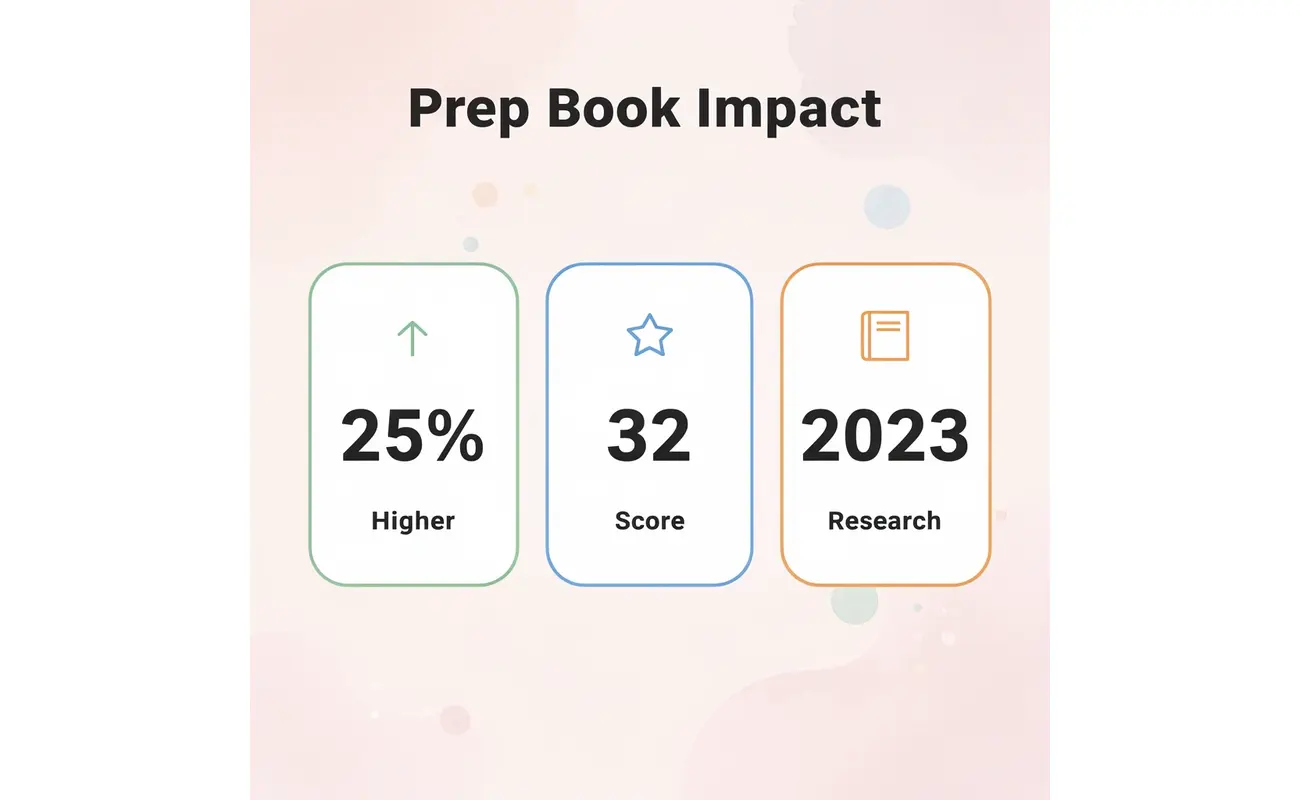
"Students who use targeted prep materials matched to their skill level see 25% higher score improvements compared to those using generic study guides." — College Board Research, 2023
💡 Tip: Take a diagnostic practice test before buying any prep book to identify whether you need foundational content review or advanced strategy work.
1. The Official ACT Prep Guide (ACT, Inc.)
This is the only book written by ACT, Inc., making it the single most important resource regardless of other materials you use. Its practice tests contain real retired ACT questions, so the difficulty level, question phrasing, and content distribution match what you'll encounter on test day. The guide includes multiple full-length practice tests with detailed answer explanations and score conversion charts for calculating accurate scaled scores.
What are the main limitations of this guide?
Its primary limitation is that it works better as a practice resource than as a teaching tool. Answer explanations are accurate but often short, so you may struggle to learn from mistakes without additional instruction. It's best for students with a strong content foundation who want to practice under real conditions, and it works most effectively when paired with a more instructionally rich resource.
2. The Princeton Review ACT Prep
Princeton Review's all-in-one guide combines content, instruction, strategy, and practice in a single resource. It covers all four ACT sections with clear explanations of concepts, targeted strategies for different question types, and balanced full-length practice tests. Its pacing guides and study schedules are particularly helpful for self-directed students needing structured preparation over several weeks.
Who should consider Princeton Review ACT Prep?
Students aiming for 34–36 scores may find the practice questions easier than the hardest real exam questions and should supplement with official materials or advanced resources. This resource works best for students with mid-range baseline skills seeking improvement across all sections without relying on multiple books.
3. ACT Math Prep by Kaplan
Kaplan's ACT Math resource provides comprehensive coverage of all ACT math content, from basic algebra and geometry through trigonometry. It includes worked examples, progressive practice sets, and detailed explanations that teach problem-solving strategies rather than rote memorization of formulas.
The main limitation is that it covers only maths—students needing help with English, reading, or science must use other resources. It works best for students whose ACT scores are held back primarily by maths performance and who want more detailed maths content than general study guides offer.
4. ACT Math Prep by Kaplan
Erica Meltzer has built a strong reputation for creating grammar and reading resources that dig deeper into the underlying rules than most mainstream prep books. Her ACT English guide systematically covers every grammar and usage concept the ACT tests, with clear explanations of the rules themselves rather than pattern recognition, building a more lasting understanding that holds up when facing unfamiliar question formats.
How does her reading guide approach differ from typical test prep methods?
Her reading guide focuses on developing analytical reading skills that the ACT rewards, rather than relying on shortcuts and elimination tricks that break down under time pressure.
What are the limitations of Meltzer's ACT prep books?
Both books have one main limitation: they are dense. They require active engagement with the material rather than passive reading, making them challenging for students seeking quick test preparation. They work best for serious students willing to spend time understanding how the ACT English and reading sections work.
5. Barron's ACT Science Workbook
The ACT science section tests data interpretation, scientific reasoning, and the ability to extract information quickly from graphs, tables, and research summaries, not scientific knowledge. Barron's ACT Science Workbook focuses instruction on these reasoning and interpretation skills with practice sets organized by passage type and data presentation format.
As a supplementary workbook rather than a complete guide, it doesn't cover the other three exam sections. It works best for students who perform well in English, maths, and reading but struggle with science due to unfamiliarity with data-interpretation tasks or concerns about scientific context.
6. Prep Expert 36 ACT Elite
For students scoring 30–33 and aiming for 34–36, improvement comes from eliminating specific error patterns rather than from a broad review of content. Mainstream prep books lack the difficulty level and analytical depth high scorers need.
What makes this book different for high scorers?
Prep Expert 36 ACT Elite is designed for advanced students, featuring challenging practice questions and strategic instruction focused on question types and traps that cost strong students points at the top of the scoring range.
Who should avoid this prep book?
It's not a good fit for students still learning the basics, as the instruction assumes prior knowledge and focuses on refining skills rather than building them from scratch. It works best for students who are already performing well in school and applying to highly competitive colleges, where one or two ACT points can affect admission decisions.
7. McGraw-Hill Education ACT
McGraw-Hill's ACT prep guide offers complete coverage of all four sections at an affordable price. It includes full-length practice tests, content review across all tested subject areas, and focused strategy instruction for frequently tested question types. For budget-conscious students seeking a reliable, complete resource, McGraw-Hill delivers strong value.
What are the limitations of McGraw-Hill ACT prep?
Its limitation is that practice questions don't always match the exact difficulty and style of the real ACT as closely as official materials or stronger third-party alternatives. Students using it as their sole resource may encounter surprises on test day. It's best suited for students beginning preparation on a limited budget who need a solid instructional foundation before accessing official practice materials through free resources like the ACT's website.
8. Magoosh ACT Prep Book
Magoosh's ACT prep book suits students who prefer self-directed learning. Its clear structure guides students through content review, strategy instruction, and practice. The conversational explanations make complex concepts accessible for independent study, while study schedule recommendations help students balance preparation with school and extracurricular commitments.
One limitation is that it covers less content than the most comprehensive guides available. Students aiming for very high scores may find it doesn't push far enough into the difficulty range required for top-tier performance. It works best for motivated self-starters who learn from written instruction, prefer working at their own pace, and are preparing from a mid-range baseline with a target score in the upper-middle range of the ACT scale.
9. Barron's ACT
Barron's ACT prep guide excels with clear visual organization, detailed content charts, and a structured review format suited to visual learners. Its section-by-section content review is thorough, practice tests are abundant, and diagnostic tools help students identify weak areas. For students who benefit from tables, charts, and clearly separated categories rather than dense writing, Barron's approach makes the material more accessible and faster to review.
What are the potential drawbacks of Barron's ACT?
Some students find its style dry compared to conversational alternatives, and its practice questions are sometimes harder than the real ACT, which can affect the accuracy of score predictions. It works best for detail-oriented students who prefer structured, visually organized materials and need extensive practice for longer preparation timelines.
10. Sterling Test Prep ACT
Sterling Test Prep offers focused ACT preparation with particular strength in science and reading. Its science materials explore passage types, graph formats, and reasoning tasks more thoroughly than most general guides, while its reading materials address comprehension and inference skills with greater instructional depth than typical all-in-one guides.
It works best as a focused supplement rather than a primary, comprehensive resource, since its coverage of math and English is less thorough than that of dedicated alternatives. It's strongest for students who have already prepared for math and English elsewhere and want focused study time on science and reading before test day.
How do you match prep books to your specific profile?
The most important principle when choosing an ACT prep book is matching the resource to your specific profile rather than selecting the most popular option. A complete guide to building foundational skills serves a different purpose than a specialized workbook designed to target a perfect score on a single section.
According to Amazon Best Sellers - ACT Test Guides, students often purchase the most visible titles without considering whether those resources match their preparation needs, which helps explain why many own multiple prep books but struggle to use them effectively.
Why should you take a diagnostic test first?
Taking a full-length diagnostic test before choosing materials helps you identify your starting point and which areas need the most work. A student who scores 28 overall, with a 23 in maths and a 32 in English, needs different resources than a student who scores 28 overall, with balanced performance across all sections.
The diagnostic test identifies specific content gaps and question types that represent the best opportunities for improvement.
How do ACT scores fit into your broader college strategy?
Most students preparing for the ACT are also working on college research, essays, scholarship applications, and other decisions that shape their college strategy. Test scores matter, but they're one part of a bigger picture.
Platforms like Kollegio help students understand how their ACT scores fit into their broader strategy, match them with competitive schools, identify scholarships that don't require perfect test performance, and provide essay feedback that prep books cannot offer. The smartest students use prep books to improve their scores while determining whether intensive test prep is the best use of their limited time.
But the best-matched prep book only works if you know what to do with the practice questions inside it.
Related Reading
- Average Sat Score
- Average ACT Score
- How To Improve SAT Score In 2 Weeks
- How Long Does A Practice SAT Take
- Sat Study Schedule
- Is the SAT adaptive
- Are SAT Prep Classes Worth It
- How Many Reading Questions Are on the SAT
- SAT Grammar Rules
- How to Prep for ACT
Why Practice Questions Alone Rarely Raise ACT Scores
Practice questions show where you need help, but they don't fix the problem. Students who complete hundreds of problems without examining patterns often see minimal score improvement because they repeat the same mistakes. Real improvement comes from what you do after you see the wrong answer.

🎯 Key Point: Simply doing more practice problems without analyzing your mistakes is like running on a treadmill - lots of effort with minimal forward progress.
"Students who focus solely on practice volume without error analysis see 25% less improvement compared to those who spend equal time reviewing their mistakes." — ACT Prep Research Institute, 2023

⚠️ Warning: The biggest trap students fall into is mistaking busy work for productive study. The quantity of practice questions never beats the quality of analysis and understanding.
Why doesn't repetition alone improve ACT scores?
Most students treat practice tests like a fitness challenge, assuming more reps equal better results. But ACT preparation rewards precision, not endurance. When you miss a question about comma splices and move immediately to the next problem without understanding why you chose wrong, you've trained yourself to make that error faster.
The ACT rewards students who recognize patterns and apply rules accurately under time pressure. Repetition without reflection doesn't build that skill.
What questions should you ask after each mistake?
High-performing students ask different questions after each mistake: Did I misread the question? Misunderstand the concept? Run out of time? They look for patterns across multiple errors rather than treating each wrong answer as isolated.
This transforms practice from a completion exercise into a diagnostic tool.
What Review Actually Reveals
Every wrong answer reveals how you think during a test. Some mistakes stem from gaps in knowledge—a grammar rule or math formula you haven't learned. Others result from rushing or second-guessing correct answers. Students who improve fastest distinguish among these types of mistakes and adjust their study habits accordingly.
A student might find that half their English mistakes stem from punctuation rules they never fully learned, or that they consistently miss inference questions by seeking directly stated answers instead of implied ones. These patterns emerge only when you track results across multiple sessions and organize errors by type. Without that analysis, you're collecting data without understanding what it means.
Why do timing issues look like content problems?
Not every wrong answer indicates a content gap. Students who answer questions correctly with ample time often struggle on tests because pacing becomes the limiting factor. They spend three minutes on a difficult geometry problem, then rush through the final five questions, missing easy points. The practice test score suggests a content problem, but the real issue is time management.
Tracking when mistakes occur reveals these patterns. If most errors cluster in the final third of a test, the solution isn't more content review; it's developing strategies to move past difficult questions and maintain accuracy under time pressure.
How can you balance test prep with overall college strategy?
While prep books provide raw material for improvement, platforms like Kollegio help students understand what practice results mean for their college strategy. Our AI counselor analyzes whether intensive test prep offers the highest-value use of study time, identifies colleges where current scores already meet scholarship thresholds, and helps students balance test preparation with essay development and application planning. Sometimes, the best response to plateauing ACT scores is a strategic shift toward strengthening other application components rather than more practice questions.
But perfect review habits only work if your study plan accounts for how learning actually transfers to test day.
How to Build an ACT Study Plan Around Your Prep Book
A prep book becomes useful when you stop reading passively and start finding your specific weak areas. Identify where you're losing points, practice those exact skills in realistic conditions, and measure whether the gaps are closing.
🎯 Key Point: Your prep book isn't meant to be read cover to cover like a novel. It's a diagnostic tool that helps you identify exactly where your ACT score is bleeding points.

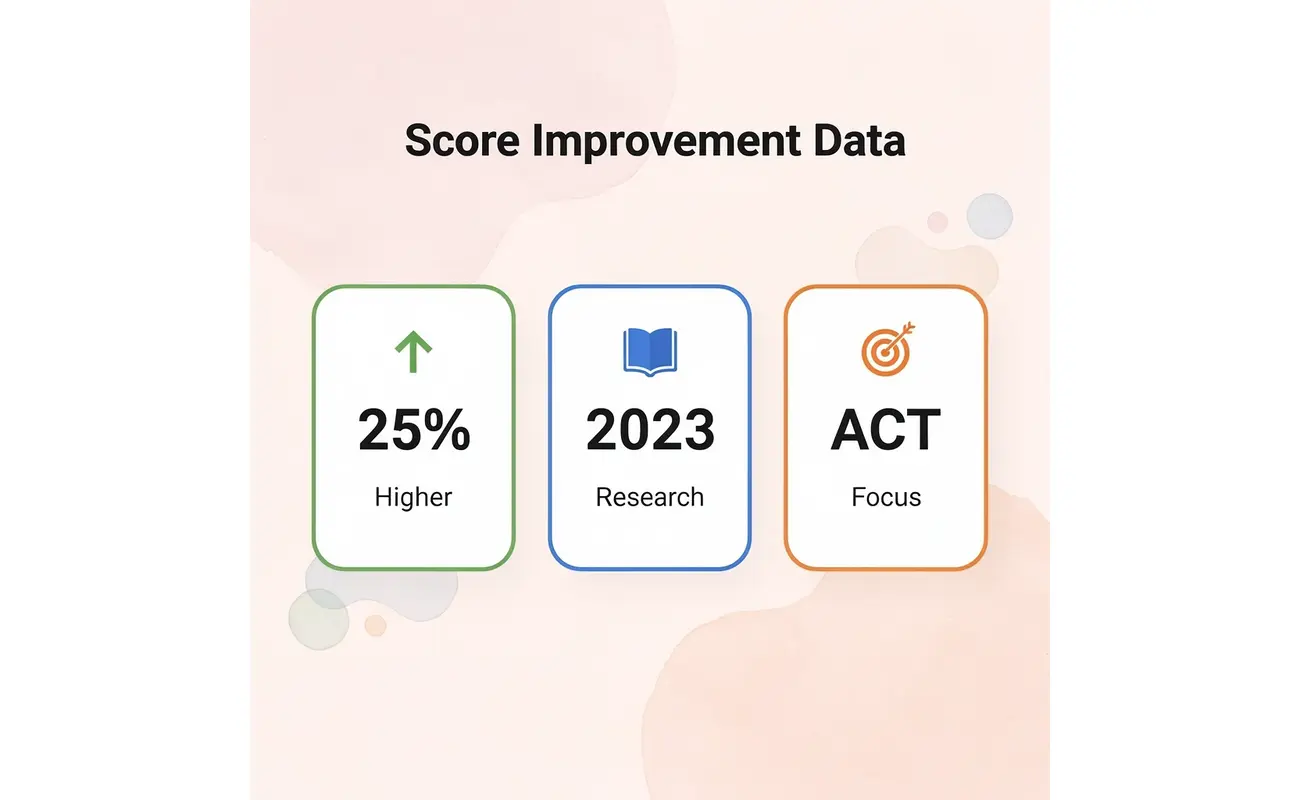
"Students who focus on their specific weak areas see 25% higher score improvements compared to those who study everything equally." — ACT Prep Research, 2023
⚠️ Warning: Many students make the mistake of randomly jumping between sections without tracking their progress. This approach wastes valuable study time and yields minimal gains in score.
Start with a diagnostic test, not Chapter One
Take a full practice test before reading strategy chapters. The score matters less than the pattern of mistakes. Look for recurring issues: misplaced commas across passages, algebra errors in early math questions, reading comprehension breakdowns on paired passages, or consistently missed science questions involving graphs.
PrepScholar's ACT study schedules recommend diagnostic testing as the foundation of effective preparation. Without baseline data, you're guessing which chapters to prioritize. With it, you know exactly where study time produces the fastest score gains.
Focus on weak areas, not sequential chapters
Once you know where points are disappearing, use your prep book strategically. A student losing points on punctuation rules should focus on grammar mechanics, not reading comprehension strategies. A student struggling with quadratic equations should work through algebra chapters, not geometry review.
Spending equal time on all topics rarely produces equal results. Targeted practice on identified weaknesses typically improves scores faster than a broad study.
Practice under timed conditions, then analyze every mistake
After strengthening weak content areas, move on to timed section practice. The ACT tests how quickly you can make decisions, how long you can sustain focus, and whether you can apply strategies when fatigued. Working through individual sections with official time limits reveals whether pacing is costing you points or if content gaps remain.
How do you analyze mistakes effectively?
Reviewing your answers matters more than the score on any single practice test. After each timed section, examine every wrong answer: Did you lack knowledge of the material, misread the question, run out of time, or use the wrong strategy? Your answer determines what to study next. Platforms like Kollegio help students see how ACT scores fit into their overall college application strategy, balancing test prep with essay writing, scholarship research, and college selection.
The most effective study plans follow a simple loop: practice reveals weak areas, review clarifies mistakes, focused study fills gaps, and future tests confirm progress. Each test provides information to improve preparation for the next one.
This works only if done regularly, not in desperate weekend study sessions before test day.
How Kollegio Helps Students Turn ACT Scores Into Stronger College Applications
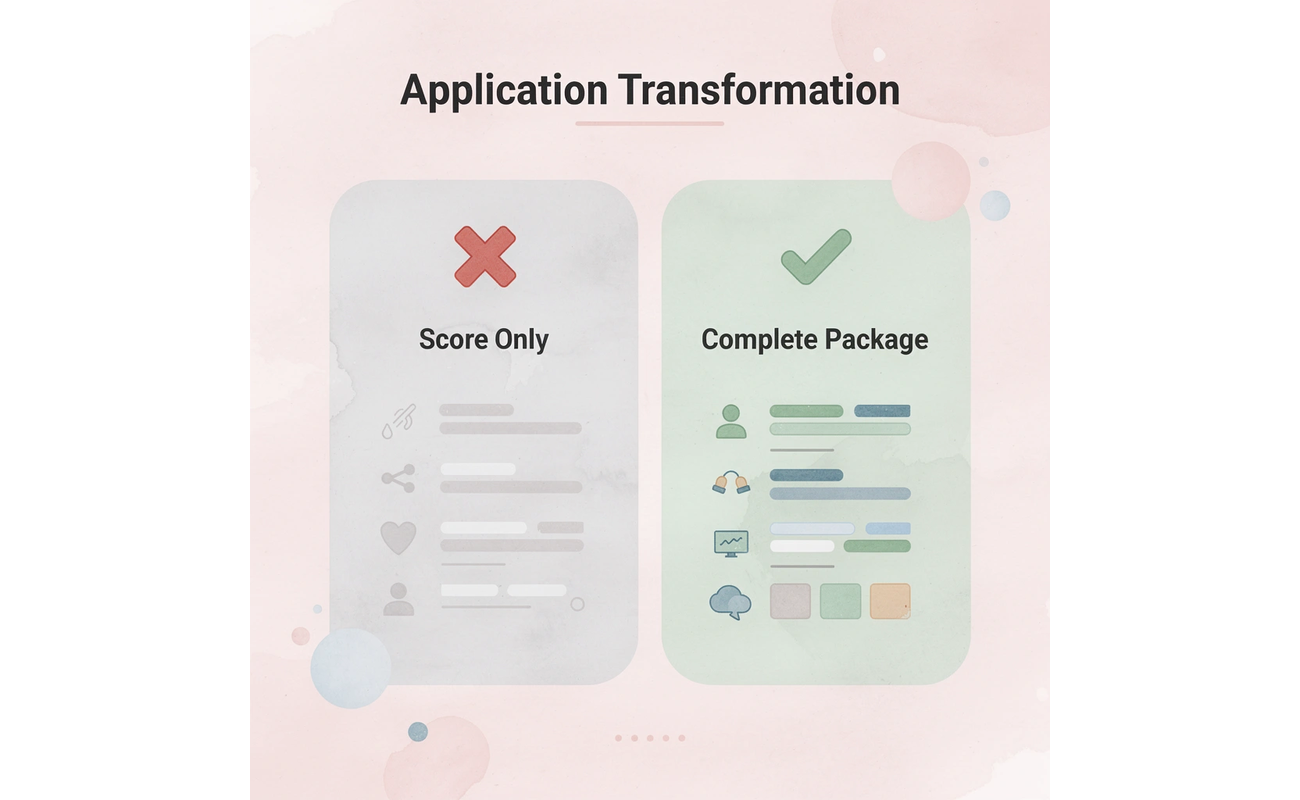
A higher ACT score strengthens an application, but admissions decisions depend on multiple factors: college selection, extracurricular involvement, essays, and academic achievements. Students who focus solely on test preparation often navigate the rest of the application process with less structure and support.
🎯 Key Point: While ACT scores are important, they're just one piece of the college admissions puzzle. Students need comprehensive support across all application components.
This is where Kollegio can help.

"Test scores alone don't guarantee admission - students need strategic guidance across every aspect of their college application to maximize their chances of success." — College Admissions Research, 2024
💡 Tip: Kollegio's platform provides the structured approach students need to transform their improved ACT scores into compelling applications that showcase their full potential to admissions committees.
Understand How Your ACT Score Fits Into Your College List
After receiving ACT results, students often struggle to determine whether their scores are competitive with their target schools. Generic rankings and broad internet searches rarely provide personalized clarity.
Kollegio's personalized college matching tools help students evaluate how their academic profile, including ACT scores, aligns with different colleges. Rather than guessing whether a 28 makes them competitive at a particular university, our AI college counselor shows students how their complete profile compares based on their individual goals and qualifications.
Discover Scholarships That Match Your Profile
Strong ACT scores can help you qualify for merit-based scholarships, but finding opportunities requires searching across dozens of websites with different requirements and deadlines.
Kollegio's scholarship discovery tools find opportunities matching your academic achievements, interests, and background. According to Senan Khawaja's analysis of enrollment data, institutions examine tens of thousands of individual data points when making admissions and scholarship decisions. Personalized matching shows you relevant opportunities without having to manually sift through hundreds of irrelevant listings.
Build Stronger Essays Without Losing Your Voice
Admissions essays present a major challenge after standardized testing. Many students struggle with choosing a topic, telling their story, and sharing experiences clearly. The pressure to sound impressive often causes essays to lose the authentic voice that admissions officers seek.
Kollegio provides essay brainstorming and feedback support to help students develop stronger application narratives while ensuring their essays remain genuinely reflective of their own experiences. Our platform helps them communicate their stories more clearly and confidently, turning scattered thoughts into coherent narratives that reveal character rather than accomplishments.
Present Extracurricular Activities More Effectively
Achievements outside the classroom matter in admissions decisions, but many students underestimate how those achievements are described. Listing "varsity soccer, four years" reveals little about leadership, commitment, or impact. Describing specific contributions—such as organizing team fundraisers or mentoring younger players—demonstrates character and meaningful involvement.
Our activity feedback tools help students highlight impact, leadership, commitment, and accomplishments, allowing admissions officers to understand the significance of experiences that might otherwise appear ordinary. A summer job becomes evidence of responsibility and time management. Babysitting younger siblings becomes a story about patience and adaptability.
Keep the Entire Admissions Process Organized
Getting ready for college means handling many deadlines, applications, essays, scholarships, and requirements simultaneously. Students manage spreadsheets, notes, calendars, and multiple websites. Important deadlines get missed not because students lack care, but because information is scattered across disconnected platforms.
How do centralized planning tools reduce student stress?
Kollegio's centralized planning tools help students organize admissions tasks in one place. Instead of wondering whether a transcript request was submitted or a recommendation letter was sent, students can track important admissions activities through a streamlined process. The mental load of remembering everything decreases when the system handles it.
But even the most organized application process requires one final element that no tool can provide.
Related Reading
- What's A Good Act Score
- When Should I Start Studying For The Act
- Act Grammar Rules
- Do Colleges Prefer Act Or Sat
- What's A Good Sat Score
- Best Sat Prep Apps
- Best Sat Prep Books
- Best Sat Practice Tests
- Best Act Prep Apps
Use Kollegio's AI College Counselor for Free Today!
That final element is you: the effort, the focus, the willingness to keep improving when progress feels slow. No book or platform can create that for you.

🎯 Key Point: The right tools remove friction between effort and progress. Our AI college counselor helps students turn ACT preparation into a complete admissions strategy. In your first session, you'll receive personalized college matches based on your academic profile, discover scholarship opportunities aligned with your goals, and identify specific next steps that strengthen your application beyond test scores. It's free, immediate, and works alongside whatever prep book you choose.
✅ Best Practice: The students who succeed understand that test prep is one part of a larger plan and take action before deadlines close. Start today at Kollegio to know exactly where your ACT score fits into the bigger picture.


Author
Senan KhawajaSenan Khawaja is the Co-Founder and CEO of Kollegio, an AI-native college counseling and institutional recruiting platform serving roughly 250,000 students across 190 countries. A Stanford graduate, repeat founder, and Forbes 30 Under 30 honoree with World Bank experience, Senan launched Kollegio to democratize elite college counseling—addressing the 400:1 student-to-counselor ratio in public schools. Under his leadership, Kollegio has secured 22+ institutional partners with a 100% renewal rate and backing from Reach Capital, JFF Ventures, and ECMC Group. He was also selected for OpenAI's inaugural ChatGPT Futures Class of 2026. Senan is based in New York City.