
7 Best SAT Practice Tests to Boost Your Score Faster
Students preparing for the SAT face a critical question: which practice tests will actually improve their scores? Quality practice materials that mirror the real exam make the difference between aimless studying and targeted preparation. The best SAT practice tests come from official College Board resources and trusted prep companies, each offering unique advantages for different learning styles.
Sorting through countless online practice options can overwhelm students who need focused preparation strategies. Rather than wasting time on random practice questions, students benefit from targeted recommendations that match their specific strengths and weaknesses. For personalized guidance on selecting the most effective practice resources, students can consult Kollegio's AI college counselor.
Summary
- The SAT transitioned to a fully digital, adaptive format in 2024, fundamentally changing how the test works. The exam now adjusts difficulty in real time based on your performance, meaning two students taking the same test may see completely different questions by the second module. Students who prepare with outdated paper tests cannot replicate this adaptive experience, which helps explain why many feel disoriented on test day despite extensive preparation.
- Students who analyze their practice tests systematically see average score improvements of 100 to 150 points, but only when they treat each exam as a diagnostic tool rather than just a score checkpoint. The difference between improvement and stagnation comes down to categorizing errors (content gaps, timing issues, and careless mistakes), identifying patterns across multiple tests, and building targeted study sessions around specific weaknesses rather than generic review.
- College Board research shows that students who take practice tests can improve by 90 to 200 points, but that gain depends entirely on whether the practice materials actually mirror the real exam. Practice tests that ignore adaptive progression may boost confidence without preparing students for the moment when difficulty jumps based on performance in the first module, creating a gap between expectation and reality that costs points on test day.
- Khan Academy's partnership with the College Board provides 20 hours of targeted practice, resulting in an average gain of 115 points. That improvement comes not from 20 hours of testing, but from focused skill work between assessments on the exact concepts where points were lost. The optimal schedule spaces full-length practice tests two to three weeks apart, with the gap filled by deliberate practice rather than repeated assessment.
- Four to six full-length practice tests provide enough data to track progress without creating assessment fatigue. Students who take 10 practice exams and improve by 30 points often see less gain than those who take 4 tests and gain 150 points, because volume matters less than what happens during the weeks between tests, when documented weaknesses are either addressed or ignored.
- Kollegio's AI college counselor helps students move from SAT scores to an actionable admissions strategy by building college lists based on test performance, surfacing scholarship opportunities that match specific academic profiles, and organizing application components that typically remain scattered across disconnected resources.
Most Students Take the Wrong Practice Tests
The practice tests students choose often matter more than how many they complete. A student working through ten outdated paper SATs from 2018 will see less improvement than someone who takes three digital practice exams that mirror the current adaptive format. The difference isn't effort—it's alignment with what the test measures today.

🎯 Key Point: Quality over quantity applies heavily to practice test selection. Using current test formats will yield significantly better preparation results than grinding through outdated materials.
"Students using current digital practice tests see measurably better score improvements compared to those relying on outdated paper formats that no longer reflect the actual testing experience."

⚠️ Warning: Many students unknowingly sabotage their prep by using practice materials that are years out of date. Always verify that your practice tests match the current format and question types you'll encounter on test day.
Why does the digital adaptive format change everything?
The SAT changed to a fully digital, adaptive format in 2024. The exam adjusts difficulty based on your performance in real time: answer several questions correctly in the first module, and the second module presents harder material. Miss too many early on, and you'll encounter easier questions later.
This adaptive structure fundamentally changes test strategy, pacing, and score calculation. Yet many students prepare using static paper exams that cannot replicate this experience, then wonder why test day feels disorienting.
Why do students choose familiar but outdated materials?
Students are drawn to what feels easy to use. Free PDFs of old paper SATs are shared widely online. Question banks promise thousands of practice items. These resources feel effective because they keep students busy, but busyness doesn't guarantee learning.
What happens when practice doesn't match the real test?
The problem emerges when score predictions don't match actual results. A student completes a paper practice test, calculates their score using an old conversion table, and expects a 1450—only for the official digital exam to return a 1380. Paper tests cannot replicate adaptive pacing, digital navigation, or the question types that appear more frequently in the current format. Students practice skills the test no longer emphasizes while neglecting those it does.
Why do generic question banks fail to prepare students effectively?
Question banks sound efficient: drill 500 math problems, master every concept, watch your score climb. But the SAT doesn't test whether you know a formula—it tests whether you can apply it under time pressure, recognize when a problem requires graph analysis versus algebraic manipulation, and avoid traps designed to catch rushed thinking.
Generic question banks rarely capture these nuances. They present isolated problems without the context of a full exam, allow students to answer untimed without the mental fatigue that builds across four modules, and provide immediate feedback that prevents them from developing the pattern recognition skills needed to catch mistakes during the actual test.
What gaps do scattered practice materials create?
One student described this disconnect clearly: they could solve difficult math problems independently, but panicked when the same concepts appeared in longer word problems during timed sections. The content knowledge was there; the test-taking resilience wasn't.
Students who rely on scattered practice materials develop uneven skills: excelling at algebra but struggling with data interpretation, or answering reading questions correctly with unlimited time but missing half when racing against the clock. These gaps don't surface until test day, which is why the quality of practice materials determines whether preparation translates into actual score improvement.
A Smarter Path Forward
Platforms like Kollegio's AI college counselor help students avoid trial-and-error by analyzing performance patterns and recommending practice resources that target specific weaknesses. Instead of guessing which materials match the current test format, students receive data-driven guidance on where to focus their study time. This shift from random practice to strategic preparation drives measurable progress.
The real question isn't whether you're working hard enough—it's whether your materials prepare you for the test you'll take. Understanding what separates effective practice from wasted effort makes choosing the right resources straightforward.
What Makes an SAT Practice Test Actually Worth Taking?
Why Alignment With the Digital Format Matters
The SAT changed fundamentally when it moved to a digital, adaptive format. The test adjusts question difficulty based on your performance in the first module of each section. Two students taking the same exam may see completely different questions in the second module. Practice tests built around the old paper format cannot prepare you for this reality: they train you for static question sets and predictable pacing that no longer exist. When students practice on materials that don't match the adaptive structure, they build habits and expectations that collapse the moment they open the Bluebook on test day.
Why Realistic Timing and Adaptive Structure Cannot Be Ignored
Adaptive testing adds a psychological element that static tests lack. Performance pressure shifts when early mistakes direct you toward easier questions with lower scoring potential, changing the pacing and stakes. College Board's research shows that students who take practice tests can improve by 90 to 200 points, but improvement depends on whether the practice test mirrors the real exam. A practice test that ignores adaptive progression may boost confidence but won't prepare you for the second module's difficulty jump based on strong first-module performance. That gap between expectation and reality costs points.
The Problem With Inaccurate Difficulty Progression
Good preparation requires practicing with the full range of question difficulty you will face. If practice materials show easier questions than the actual SAT, you develop a false sense of readiness and may score well on practice tests only to discover the real exam feels harder and your strategies no longer work. If practice questions are much harder than the real test, you may abandon effective techniques or lose confidence unnecessarily. The most valuable practice tests mirror the actual progression from straightforward problems to more demanding challenges, so you know exactly what to expect.
What makes practice test scores reliable?
Students use practice test scores to measure progress toward their target, but this estimate is only valid if the scoring model matches the official SAT calibration. Poorly designed practice exams inflate scores through easier questions or lenient algorithms, creating false confidence that disappears on test day.
Others underestimate performance, causing unnecessary anxiety and misguided study decisions. Piqosity reports that the College Board released practice tests 7 through 10 to address the shortage of high-quality, accurately calibrated materials. Reliable score estimates help you set realistic goals, decide whether you need additional preparation, and identify which score ranges require the most attention.
How do you find quality practice materials when official tests run out?
Many students exhaust the official College Board practice tests quickly, prompting them to seek alternatives that may not align with the Bluebook environment. Platforms like AI college counselor fill this gap with organized, adaptive practice materials designed for the current digital SAT format. Kollegio provides day-by-day study plans tailored to specific score goals.
The real value of a practice test is not the score it generates, but whether it shows you what you still need to learn. Without that clarity, even hard work becomes guesswork.
Related Reading
- How to Ace the SAT
- Is the SAT Hard
- What is SAT Prep Class
- Benefits Of Sat Exam
- Can You Take The Sat After High School
- Should I Take The Act Or Sat
- How Many Times Can You Take the SAT
- When to Start SAT Prep
7 Best SAT Practice Tests
The best SAT practice tests are those made by the College Board itself. High-quality tests from other companies that match the digital adaptive format and provide detailed explanations will come next. Official materials should form the foundation of your practice routine. Third-party tests help when you need more practice or want to analyze your skills more deeply.

🎯 Key Point: Always prioritize official College Board tests over third-party options for the most accurate representation of the actual SAT experience.
"Using official practice materials increases test familiarity and can lead to score improvements of 50-100 points compared to unofficial resources alone." — College Board Research, 2023
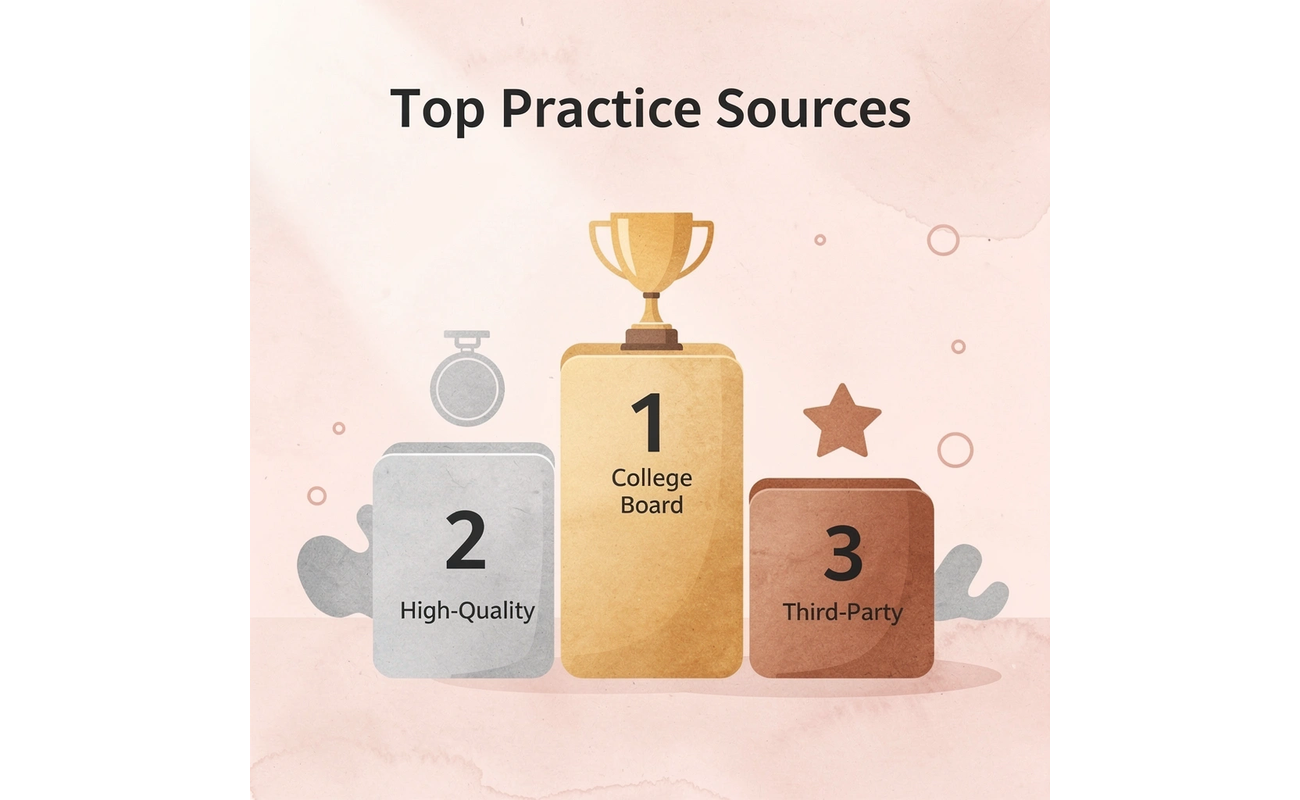
💡 Pro Tip: Mix official tests with high-quality third-party options to get the best of both worlds - authentic practice plus comprehensive skill analysis.
1. College Board Official Digital SAT Practice Tests (Bluebook)
Bluebook gives you the only practice experience that perfectly copies the test day. Every time limit, interface detail, and adaptive algorithm match the actual exam because the College Board creates both. When you complete a Bluebook practice test, the difficulty of your second module adjusts based on your first module performance, as it will during the real SAT.
Why does authentic practice experience matter?
Your practice score reflects not only how many questions you answered correctly, but how the testing algorithm responded to your performance.
Third-party tests attempt to replicate this experience but fall short. The pacing differs, question progression doesn't align, and you develop muscle memory for an unfamiliar interface. Students relying exclusively on non-official materials often report that the actual SAT felt unfamiliar despite hundreds of practice questions, because the rhythm and flow didn't match their training.
2. Khan Academy Official SAT Practice
Khan Academy works with the College Board to provide access to real SAT questions from past exams and the scoring methods used. After completing a diagnostic test or connecting your PSAT score, the platform creates a personalized study plan that targets the areas where you need the most help. According to the College Board SAT Suite, full-length paper practice tests remain available for additional official practice questions.
How do Khan Academy's video explanations improve learning?
Khan Academy's video explanations for every question set it apart from platforms that only focus on test scores. When you miss a question, an instructor walks you through the reasoning process, explaining why wrong answers seem tempting and how to recognise patterns that lead to correct ones. This transforms practice from measuring your score into developing your skills.
3. UWorld SAT Practice Tests
UWorld's reputation stems from its deep answer explanations rather than question volume. Each explanation walks you through the reasoning behind every answer choice—correct and incorrect—helping you build the understanding needed to approach similar questions differently next time.
Why do students choose UWorld after official materials?
Students who have stopped making progress after using all official materials often find that UWorld's explanations reveal gaps in their thinking that score reports alone cannot identify.
How does UWorld build genuine understanding?
The difference between pattern recognition and genuine understanding becomes obvious when you encounter a question type you've practiced extensively but still answer incorrectly. UWorld's explanations force you to confront why your approach failed on that particular question, not which answer was correct.
4. Princeton Review SAT Practice Tests
Princeton Review combines practice tests with strategic instruction, letting you apply lessons immediately rather than repeating problems without improvement. Score reports show your performance patterns across question categories and difficulty levels, then explain how to adjust your approach. You don't just learn that you struggle with data analysis questions—you learn which specific parts cause your errors and practice targeted techniques to fix them.
How does strategic practice lead to better results?
The difference between two students who complete eight practice tests is stark: one takes each test, reviews the score, and moves on; the other uses each test as a diagnostic tool that shapes the next week of focused practice. The first student's scores plateau after three or four tests. The second student's scores climb steadily because each practice test reveals the next skill to develop.
5. Kaplan SAT Practice Tests
Kaplan's adaptive scoring reports break down performance by skill domain, question type, and difficulty level. You see not just a 650 math score, but that you answered 85% of algebra questions correctly while missing 60% of advanced geometry questions, and that accuracy drops on medium-difficulty reading questions. This detail transforms vague improvement goals into specific practice targets.
Why does Kaplan integrate practice tests with instruction?
Practice tests generate the most value when connected to targeted instruction. A detailed score report identifying weaknesses helps only if you can access high-quality lessons and practice materials focused on those areas. Kaplan's integration of practice tests with video instruction, skill drills, and tutoring options creates a complete preparation system rather than isolated testing events.
6. College Board Linear Practice Tests (PDF Format)
Piqosity reports that 4 new SAT practice tests (tests 7-10) have been released, expanding the official question bank for students who have completed all adaptive Bluebook tests. These linear PDF tests comprise entirely official College Board questions, making them more valuable than third-party alternatives. Use them to expose yourself to more official question types and difficulty levels, rather than to simulate test day conditions.
How do linear tests differ from adaptive tests?
Because linear tests don't adapt, every student sees the same questions regardless of performance. This lets you practice questions that might not appear in your adaptive modules, helping fill knowledge gaps. A high-performing student might never encounter certain easier question types in adaptive modules, while a struggling student might never see the hardest questions. Linear tests provide access to all content types and difficulty levels on the SAT.
7. Prep Expert SAT Practice Tests
Prep Expert combines practice tests, live teaching, and a community of students with shared goals, addressing the isolation of solo study. A structured program with scheduled tests, group instruction, and peer accountability fosters genuine engagement in preparation.
How does structured score improvement planning work?
Structured score improvement plans matter because generic study schedules don't account for individual starting points or target scores. A student aiming to improve from 1100 to 1250 needs different practice than one targeting 1500. Similarly, a student with six months to prepare should practice differently from one with six weeks. Prep Expert builds study plans around your specific situation rather than using the same plan for every student.
What should you analyze beyond your practice test score?
Most students treat practice tests as score predictors rather than tools for identifying gaps. The real question isn't what you scored, but what the test revealed about which skills need development. That insight comes from analyzing not just which questions you missed, but why you missed them and what patterns connect your errors.
But knowing which tests to take is only the beginning.
Related Reading
- Average Sat Score
- Average ACT Score
- How To Improve SAT Score In 2 Weeks
- How Long Does A Practice SAT Take
- Sat Study Schedule
- Is the SAT adaptive
- Are SAT Prep Classes Worth It
- How Many Reading Questions Are on the SAT
- SAT Grammar Rules
- How to Prep for ACT
How to Turn Practice Tests Into Actual Score Gains
Taking a practice test and reviewing it are two different activities. Students who analyze their practice tests systematically see an average score improvement of 100-150 points because they treat each exam as a diagnostic tool rather than a performance checkpoint. Real gains come from what happens after you close the test booklet.

"Students who analyze their practice tests in a systematic way see an average score improvement of 100-150 points because they treat each exam as a diagnostic tool rather than a performance checkpoint." — Test Analysis Research
🎯 Key Point: The practice test itself is only the beginning - the real learning happens during your post-test analysis when you identify patterns, weaknesses, and improvement opportunities.
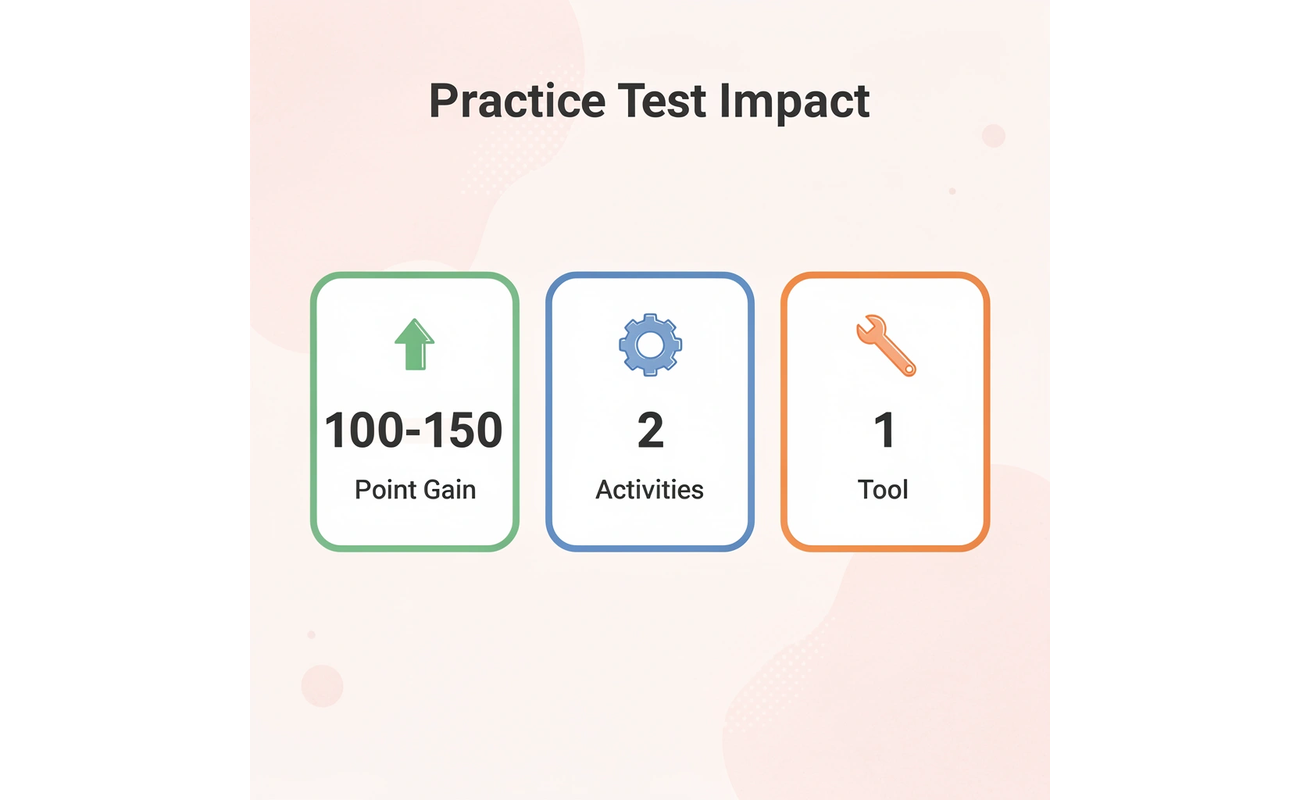
⚠️ Warning: Most students make the mistake of simply checking their answers and moving on. This passive approach wastes the most valuable part of practice testing - the diagnostic insights that drive actual score gains.
How should you categorize your mistakes?
Sort every missed question by error type: content gap (didn't know the material), misread question (answered what wasn't asked), careless mistake (dropped a negative sign), poor strategy (spent four minutes on a one-point problem), time pressure (guessed randomly at the end), or insufficient evidence (eliminated three choices but guessed between two).
Students often assume every wrong answer reflects a knowledge gap. In reality, half the errors on any test stem from timing, attention, or approach rather than understanding.
What specific concepts should you identify?
Once you've organized errors, identify the specific concepts causing trouble. For Math, this might include linear equations, exponents, or data interpretation. For Reading and Writing, you might struggle with inference questions, grammar conventions, or vocabulary in context.
One missed algebra question could be random. Five missed algebra questions show a skill gap worth addressing directly.
How do timing problems affect your SAT score?
Look at how long each question took and whether your accuracy declined near the end of each module. Pacing issues cost almost as many points as knowledge gaps. Spending too much time on a single hard problem prevents you from finishing several easier questions worth the same points.
If you consistently run out of time in the final five minutes, that's a strategy problem, not a knowledge gap. Learn to recognize when a question will take more time than it's worth, and flag it for a revisit if time permits.
What patterns should you look for across multiple practice tests?
After reviewing multiple tests, clear patterns emerge: you consistently missed advanced algebra questions, frequently selected nearly correct answer choices, struggled with longer reading passages, lost accuracy under time pressure, and made avoidable arithmetic mistakes.
These patterns are more valuable than any single test score. A score tells you where you are today; patterns tell you what must change to improve tomorrow. Students who track errors across several practice exams often discover that three or four specific question types account for most of their lost points.
How do you create targeted study sessions after identifying weaknesses?
Once weaknesses are identified, create targeted study sessions. Instead of a generic review ("I need to study SAT Math"), focus on specifics: "I missed seven questions involving systems of equations, so I will spend this week reviewing systems of equations and completing 30 targeted practice problems."
Each future practice exam becomes an opportunity to verify whether those weaknesses have improved. Students who use this approach often find that their scores plateau until they address the root cause, then jump significantly once the underlying skill gap closes.
When should you practice and how often?
Knowing what to fix is only half the equation; the other half is knowing when to practice and how often.
Building an SAT Practice Test Schedule That Works
When to Schedule Tests (And What to Do Between Them)
The mistake most students make is treating practice tests like cardio training: scheduling one every Saturday, checking the score, and moving on. Test prep isn't about building endurance through repetition. It's about identifying specific weaknesses, fixing them, and verifying the fix worked.
How much practice time leads to score improvements?
According to Khan Academy, 20 hours of practice on their platform is linked to an average score gain of 115 points. This represents focused skill work between tests, not testing time: working on the exact concepts where points were lost.
What's the optimal spacing between practice tests?
Space full-length practice tests two to three weeks apart. That gap is when actual improvement happens: focused review of error patterns, deliberate practice on weak content areas, and reinforcement of effective strategies. Students who compress this timeline often plateau because they measure the same problems repeatedly rather than solving them.
How Many Practice Tests Are Actually Necessary?
Four to six full-length practice tests provide enough information to track your progress without causing test fatigue. The first test establishes your baseline, the second and third tests show whether focused studying addresses your weak areas, and the final one or two tests simulate test day and confirm your readiness.
More tests do not automatically lead to better scores. I have seen students take ten practice exams and improve by 30 points, while others take four and gain 150 points. The difference lies not in how many tests you take, but in what you do between tests: either fix the weak areas you found or hope the next attempt goes better.
Why do marathon study sessions backfire?
Studying for a marathon all day often backfires. Six-hour study blocks on weekends produce worse results after the first two hours: attention fades, retention drops, and students finish tired rather than sharp.
Shorter, focused study sessions spread across the week work better. Forty-five minutes reviewing grammar rules, an hour working through algebra problems, and thirty minutes analyzing reading comprehension errors. The brain consolidates learning between study sessions, which is why spacing study time across multiple days outperforms cramming.
How do you build a realistic study schedule?
Most students need a realistic schedule they'll follow, built around school commitments and other responsibilities. Our Kollegio AI college counselor helps students design personalized prep timelines that account for their availability, then tracks whether the plan produces measurable score movement or requires adjustment based on practice test results.
But the best schedule matters only if you know what to do when test day arrives.
How Kollegio Helps Students Turn SAT Results Into Stronger Applications
How does your SAT score determine college competitiveness?
You finally have your SAT score. Now you face a different challenge: figuring out which schools make sense. Students spend hours comparing acceptance rates across dozens of websites to determine whether a 1350 makes them competitive at one school versus another. Admissions standards shift between institutions, and generic rankings don't account for your specific profile, intended major, or geographic preferences.
What happens when college lists become unbalanced?
As complexity grows, the college list either becomes too conservative, missing reach opportunities, or unrealistic, wasting application fees on schools with negligible admission odds. Our Kollegio AI college counselor helps students build targeted college lists by evaluating how their SAT performance, GPA, activities, and interests align with specific institutions, transforming scattered research into a practical admissions strategy.
How can strong SAT scores unlock scholarship opportunities?
Strong SAT performance can unlock scholarship eligibility, but most students never find opportunities that fit their background. Manual scholarship searches require navigating fragmented databases, tracking dozens of deadlines, and sorting through awards misaligned with academic achievements, geographic location, or field of interest. Students end up applying to generic scholarships with fierce competition, while niche opportunities aligned with their profile remain invisible.
What makes targeted scholarship discovery more effective?
Kollegio's scholarship discovery tools show opportunities based on your academic accomplishments, demographic background, and intended major. Rather than filtering through irrelevant results, you see scholarships where your SAT score, extracurricular involvement, and personal story give you a genuine competitive advantage.
How do you identify experiences worth writing about?
Your SAT score demonstrates your readiness for college academics, while your essay provides background information that test scores cannot reveal. Many students struggle with fundamental questions: Which experiences should I write about in 650 words? What makes my story different from thousands of other applicants? How do I show growth without sounding inauthentic?
How can you maintain authenticity while improving your writing?
The gap between having meaningful experiences and explaining why they matter often results in essays that feel either generic or overly polished. Kollegio provides essay brainstorming support to help you identify compelling themes from your own experiences, organize ideas into coherent narratives, and refine your writing while maintaining your authentic voice. You receive feedback that helps you tell your story more clearly.
How can you better communicate your extracurricular impact?
Many applicants underestimate how presentation shapes perception. You may have spent three years leading a community service project, working twenty hours weekly to support your family, or building something creative that mattered to you. But when admissions officers read "volunteered at local food bank" or "worked part-time job," they cannot see the depth of your contribution, the responsibility you carried, or the impact you created.
What tools help transform vague descriptions into compelling evidence?
Kollegio's activity feedback tools help you explain what you did (specific responsibilities), how you grew (skills developed, challenges overcome), and why it mattered (measurable outcomes, people affected). This transforms vague descriptions into evidence that strengthens your application.
Keep the Entire Application Process Organized
SAT preparation, college research, scholarship applications, essay development, activity descriptions, and application deadlines typically live across separate websites, spreadsheets, browser bookmarks, and scattered documents. This fragmentation increases the risk that something important falls through the cracks: a missed deadline, forgotten supplemental essay, or overlooked scholarship can cost you opportunities you worked months to earn.
Kollegio centralizes these components so you can manage your college list, scholarship matches, essay drafts, and timeline in one place with visible progress and nothing lost.
But having the right tools matters only if you use them.
Use Kollegio's AI College Counselor for Free Today!
Use your practice test score to build a clearer path forward. Kollegio turns raw SAT data into personalized college lists, scholarship matches, and application priorities that fit your academic profile—guidance that typically costs families thousands of dollars.

🎯 Key Point: Transform your test scores into an actionable college strategy with personalized guidance that normally requires expensive counseling services.
"Personalized college counseling that fits your academic profile and scholarship matches can save families thousands of dollars in professional guidance fees." — College Admissions Industry Analysis
In your first session, generate a college list aligned with your scores, discover scholarships that match your background, and identify which parts of your application deserve the most attention. The platform shows where your numbers make you competitive and where you might be underestimating your options. Start with Kollegio for free and turn score data into an admissions strategy.
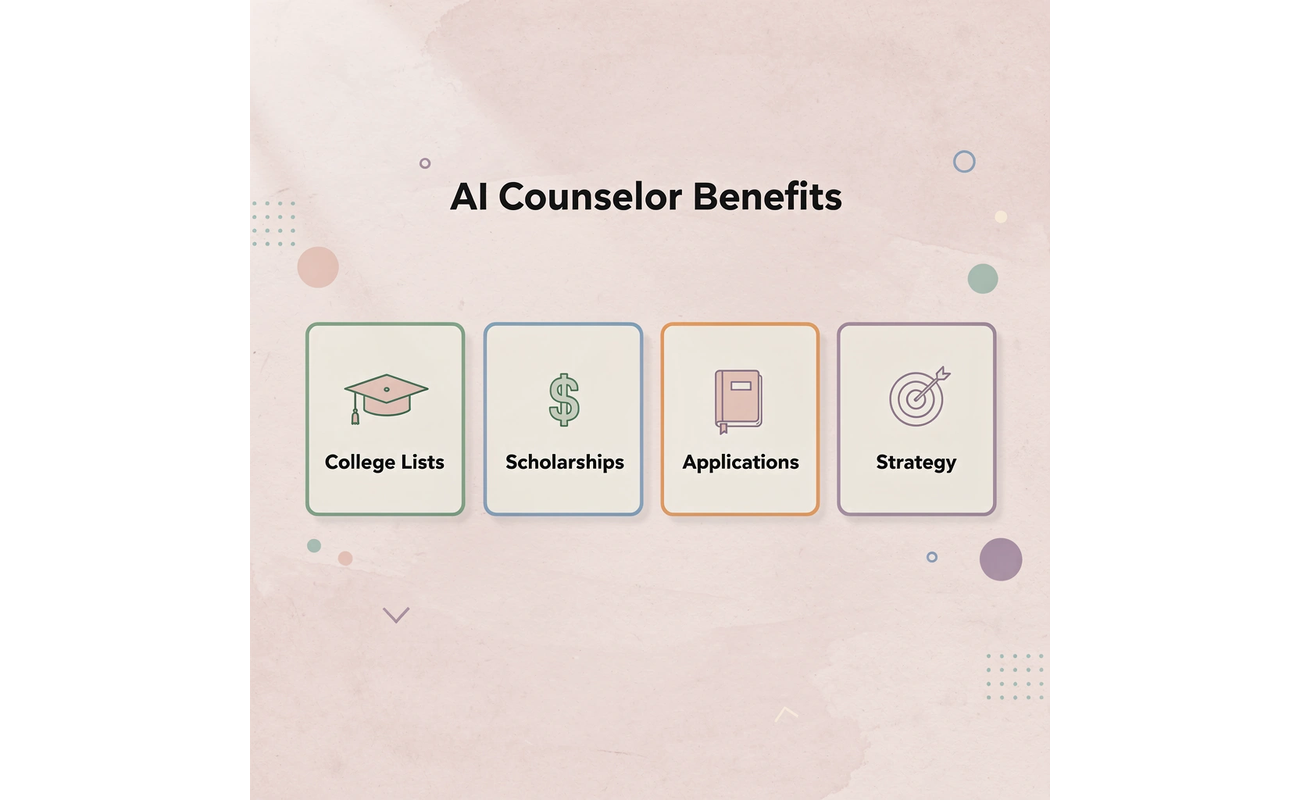
💡 Tip: Don't let good test scores go to waste—use AI-powered tools to maximize your college application potential and discover opportunities you might have missed.
Related Reading

Author
Senan KhawajaSenan Khawaja is the Co-Founder and CEO of Kollegio, an AI-native college counseling and institutional recruiting platform serving roughly 250,000 students across 190 countries. A Stanford graduate, repeat founder, and Forbes 30 Under 30 honoree with World Bank experience, Senan launched Kollegio to democratize elite college counseling—addressing the 400:1 student-to-counselor ratio in public schools. Under his leadership, Kollegio has secured 22+ institutional partners with a 100% renewal rate and backing from Reach Capital, JFF Ventures, and ECMC Group. He was also selected for OpenAI's inaugural ChatGPT Futures Class of 2026. Senan is based in New York City.