
Students are passionate about programming, software development, or cybersecurity, but worried about student loans. Understanding how to qualify for a scholarship opens doors to funding opportunities specifically designed for students pursuing technology degrees, from merit-based awards recognizing academic excellence to scholarships targeting women in STEM, underrepresented minorities, or students with specific coding skills. These opportunities can significantly reduce the financial burden of pursuing a tech education.
Stop wondering.
Start matching.


Finding the right scholarships and crafting winning applications takes time and strategy, which is where having expert guidance makes a real difference. Students need to identify scholarships that match their specific profiles, whether they're interested in artificial intelligence, data science, or information technology, while also strengthening their applications to stand out from other candidates. The process involves organizing deadlines, highlighting technical projects and achievements, and receiving feedback that increases the chances of securing financial aid. For personalized guidance throughout this journey, students can leverage an AI college counselor to streamline their scholarship search and application process.
Table of Contents
- You’re Applying to the Most Competitive Scholarships
- Why Most “Best Scholarships” Lists Mislead You
- 12 Best Computer Science Scholarships by Category
- How to Actually Choose the Right Scholarships
- A Smarter Application Strategy That Increases Win Rates
- How Kollegio Helps You Find Scholarships You Can Actually Win
- Use Kollegio's AI College Counselor for Free Today!
Summary
- Computer science scholarships with national recognition often have acceptance rates of 1-2%, creating a visibility trap in which the easiest programs to discover become the hardest to win. Students concentrate their efforts on the same dozen high-profile awards (Gates Millennium, Google, Microsoft), competing against tens of thousands of applicants with near-perfect credentials. The pattern repeats across application cycles, with strong candidates becoming statistical noise in overcrowded pools while overlooked regional and niche scholarships receive a fraction of the applications.
- Most scholarship lists recycle the same 10 to 20 opportunities, optimized for search visibility rather than student outcomes. This repetition shapes behavior, funneling applicants toward prestigious programs regardless of fit. According to research supported by Vanderbilt University, rankings and lists mislead students by emphasizing prestige over actual alignment. The Coca-Cola Scholars Program receives over 90,000 applications annually for roughly 150 awards (a 0.17% acceptance rate), illustrating how visibility concentrates competition while countless smaller scholarships remain undersubscribed.
- Close to $100 million in scholarships go unclaimed each year, with an additional $2 billion in student grants left unawarded due to a lack of applicants. The gap exists not because money is scarce, but because students allocate attention poorly. Geographic restrictions, technical specializations (AI, cybersecurity, open source), and identity-based criteria naturally limit applicant pools, yet students overlook these categories in favor of nationally advertised programs. State-specific STEM scholarships and university-partnered funding often provide comparable amounts with dramatically better odds.
- Only about 11 percent of students receive scholarships, despite millions in available funding. The difference is not effort but alignment. Students who apply to 8-12 well-matched scholarships, tailoring each application to specific selection criteria, consistently outperform those treating the process as a numbers game. Selection committees choose candidates who best serve their specific mission (whether that is cybersecurity skills, first-generation status, or regional residency), not the most impressive applicant overall.
- Students who build a portfolio of strong, adaptable narratives and apply them strategically to well-matched opportunities spend less total time while achieving better results. The same machine learning project can be framed around innovation for one scholarship and community impact for another, with the story staying consistent but emphasis shifting based on what evaluators prioritize. This approach reduces effort while increasing relevance, allowing iteration on proven material instead of drafting unfamiliar content under deadline pressure.
- Kollegio's AI college counselor addresses this by analyzing your academic standing, technical interests, and background to surface scholarships where your profile aligns naturally, helping you focus on applications where you meet over 70 percent of the selection criteria rather than competing in overcrowded national pools.
You’re Applying to the Most Competitive Scholarships
When you search for computer science scholarships, you find the same dozen programs: Gates Millennium Scholars, Google scholarships, and Microsoft awards. Their popularity makes them easy to find but extremely hard to win. You're competing against thousands of applicants with perfect GPAs, published research, or hackathon wins.

"The most popular scholarship programs receive 10,000+ applications for just 100-200 awards, creating acceptance rates lower than 2%." — National Scholarship Research, 2024
🎯 Key Point: The most visible scholarships have the highest competition rates because every qualified student applies to them.
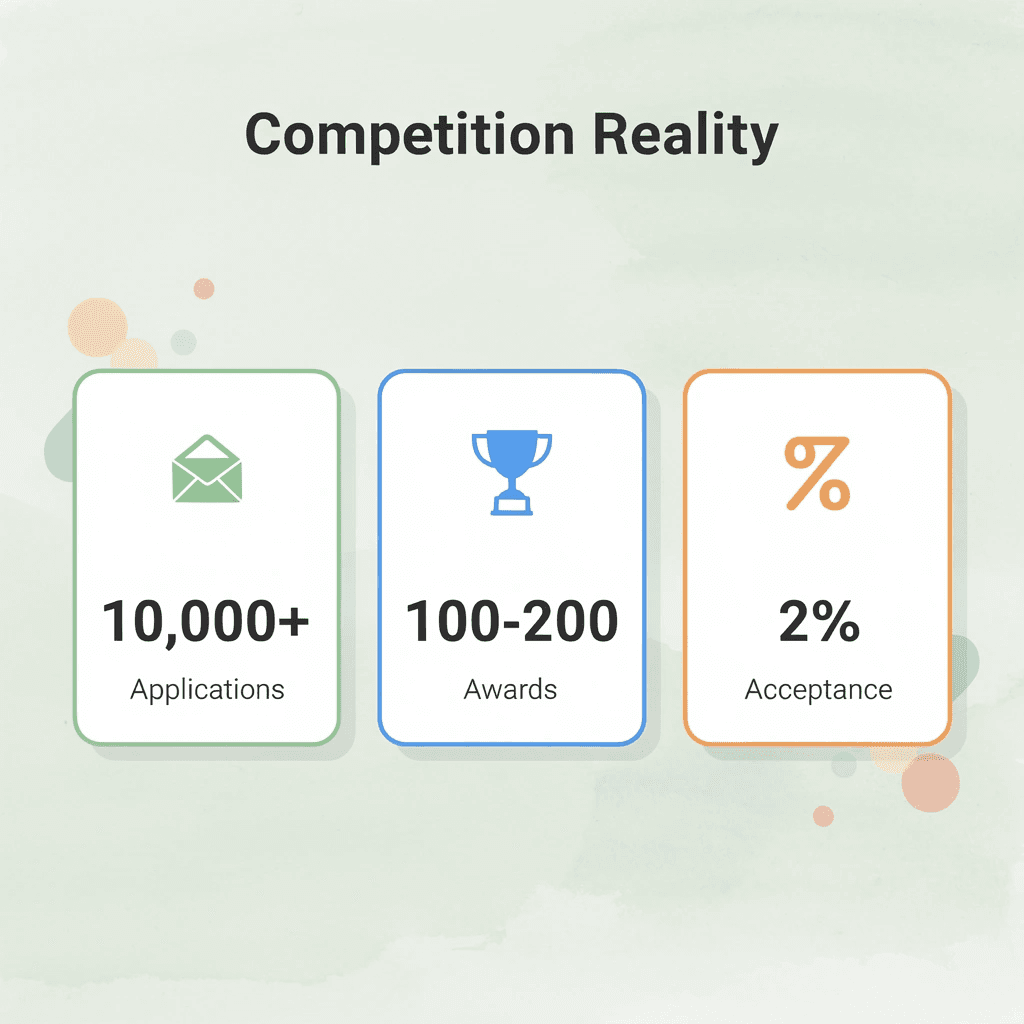
⚠️ Warning: Focusing only on top-tier national scholarships means you're competing in the most saturated applicant pools, where even exceptional students face rejection rates above 95%.
The visibility trap
Large national scholarships attract applicants the way bright lights attract moths. A $25,000 award from a recognizable tech company sounds like the obvious target, so students spend hours crafting essays and gathering recommendation letters for programs with acceptance rates of 1-2%. But productivity and effectiveness aren't the same thing. When 10,000 students apply for 50 spots, even strong candidates become statistical noise.
Students apply to five or six highly visible scholarships, receive automated rejection emails, and conclude that scholarships aren't for them. The problem wasn't their qualifications; it was the playing field they chose.
Where competition actually lives
Most scholarship lists don't distinguish between opportunities you can realistically win and those that are highly competitive. They present every award as equally likely, treating a local computer science scholarship from your state's tech group the same as a nationally televised competition. Students approach their scholarship search like a checklist, checking boxes without considering where their specific profile—GPA, project experience, demographic background, and geographic location—actually stands out.
Where can you find less competitive scholarships?
The scholarships buried on page three of search results—those offered by regional professional organizations, state-specific STEM initiatives, or smaller tech companies—often receive a fraction of the applications. A $3,000 scholarship from your state's chapter of Women in Technology might have 200 applicants instead of 20,000. Your odds improve by two orders of magnitude, and the award still covers a semester of tuition.
How do modern platforms improve scholarship matching?
Traditional scholarship searches push everyone toward the same popular options. Platforms like Kollegio's AI college counselor change that by focusing on fit first, matching your academic standing, technical interests, and personal circumstances to scholarships where you have a genuine chance of winning. Instead of applying to well-known scholarships, you apply to those suited to your profile.
But knowing where competition concentrates doesn't address the bigger problem with how most students search for scholarships.
Related Reading
- How to Qualify for a Scholarship
- How Many Scholarships Should I Apply For
- Can You Get Multiple Scholarships
- Universities That Offer Full Scholarships To International Students In Usa
- Best Colleges For Soccer Scholarships
- Best Colleges For Swimming Scholarships
- Environmental Engineering Scholarships
- Health Science Scholarships
- Scholarships For Sociology Majors
- Fine Arts Scholarships
Why Most “Best Scholarships” Lists Mislead You
Most "best scholarships" lists prioritize visibility over actual outcomes, highlighting large, well-known awards because those names attract clicks and rank well in search engines, not because they offer the best odds. The same scholarships appear across dozens of sites with little variation.

🎯 Key Point: Popular scholarship lists focus on brand recognition rather than your actual chances of winning, leading students toward oversaturated competitions.
"The most advertised scholarships often have acceptance rates lower than Ivy League admissions, yet they dominate every 'best of' list." — College Financial Aid Research, 2023

⚠️ Warning: Following these mainstream lists means you're competing with thousands of other students who found the exact same recommendations on dozens of identical websites.
Why do scholarship lists recycle the same opportunities?
Many scholarship lists feature the same 10 to 20 well-known opportunities, which shape student behavior. When every list shows identical scholarships, applicants focus on them rather than exploring a wider range of options.
According to a recent report supported by Vanderbilt University and conducted by NORC at the University of Chicago, rankings and lists mislead students by prioritizing prestige over fit. In scholarship searches, prominence becomes a proxy for quality, even when it misaligns with your actual chances.
How does visibility affect scholarship competition?
Well-known scholarships receive far more applications than they can award. The Coca-Cola Scholars Program, for example, receives over 90,000 applications annually for around 150 awards: an acceptance rate of roughly 0.17%.
A small group of well-known scholarships receives substantial demand, while smaller, niche scholarships attract far fewer applicants.
What selection committees actually evaluate
Most lists ignore fit, which is what selection committees evaluate. Scholarships are awarded based on how well a candidate matches specific criteria: technical focus, background, region, or experience type. By ignoring fit, these lists create a false signal where visibility suggests opportunity, when visibility often signals greater competition.
Why do students focus on the wrong scholarships?
Students focus their efforts on well-known scholarships, which increases competition and reduces their chances of success. Our AI college counselor at Kollegio filters opportunities based on academic profile, technical interests, and personal circumstances, surfacing scholarships where your background makes you competitive rather than lost in a massive pool.
What determines if a scholarship is worth your time?
The deeper problem is not where students apply, but how they decide what counts as worth their time.
12 Best Computer Science Scholarships by Category
The category a scholarship belongs to matters more than its monetary value or recognition. Scholarships targeting specific skills, identities, or regions offer better chances of winning because fewer students qualify or apply. Understanding which category fits your profile helps you build a funding strategy that balances applying to many scholarships with realistic chances of success.
🎯 Key Point: Niche scholarships often have significantly lower competition rates than general academic scholarships, making them strategic targets for your application efforts.
"Students who focus on category-specific scholarships that match their background have 3x higher success rates than those applying randomly to popular programs." — National Scholarship Research Institute, 2024
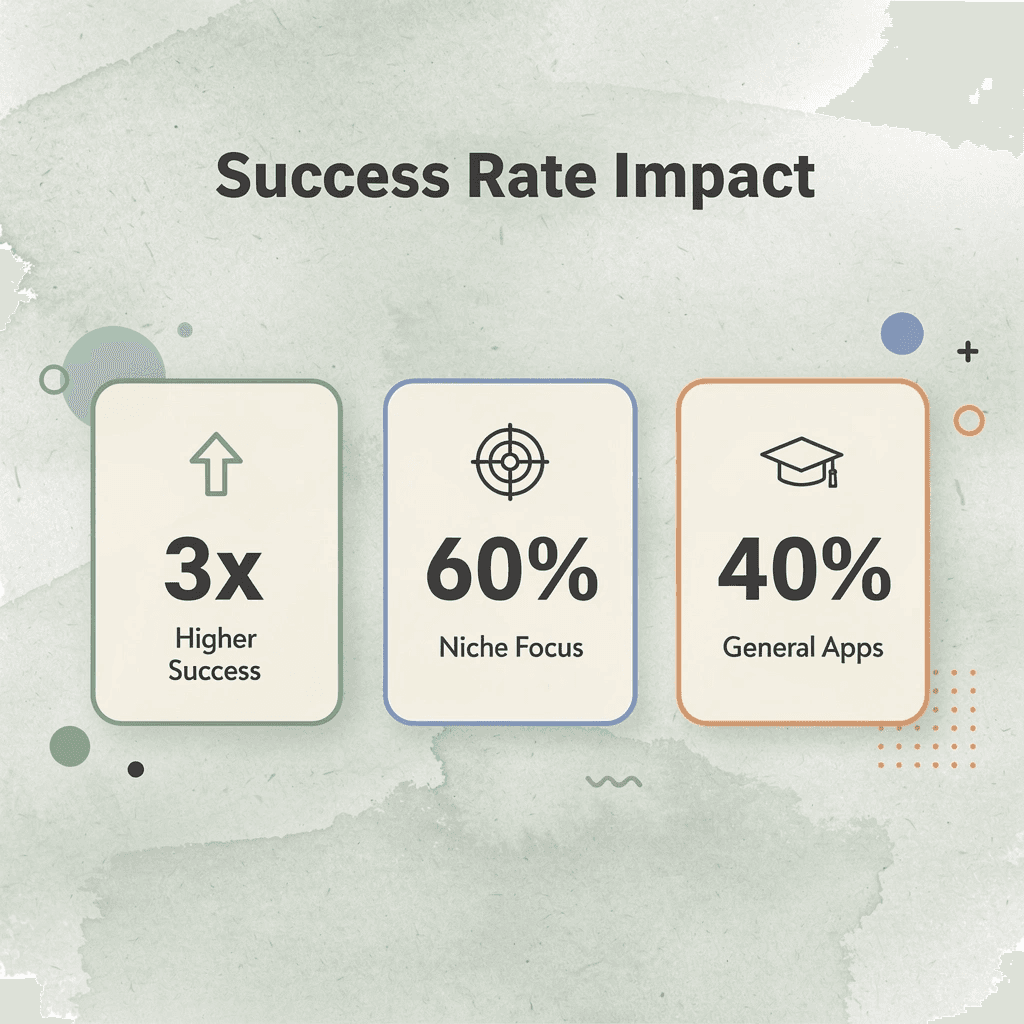
💡 Strategic Tip: Create a scholarship portfolio that includes at least 60% niche categories (skills-based, identity-focused, or region-specific) and only 40% general academic scholarships to maximize your chances of winning funding.
National, High-Visibility Scholarships
These programs draw large applicant pools and require more than good grades to stand out. Selection committees want evidence of genuine engagement through projects, research, leadership, or community involvement. Pursue these programs if your background has multiple strong points; otherwise, treat them as long shots and focus on opportunities that suit you better.
1. Google Generation Scholarship
Google Generation Scholarship provides up to $10,000 annually for computer science and engineering students, prioritizing women and underrepresented groups in technology. Recipients attend a professional development retreat and receive mentoring from Google engineers, making it an excellent option for students pursuing careers at major tech companies.
2. Microsoft Scholarship Program
Microsoft Scholarship Program offers funding to computer science students, along with mentoring and access to Microsoft's professional networks. The program prioritizes students who demonstrate technical skill and leadership beyond the classroom.
3. Amazon Future Engineer Scholarship
Amazon Future Engineer Scholarship offers up to $40,000 in funding plus a guaranteed paid internship at Amazon, providing real experience in the tech industry and insight into how one of the world's largest tech companies operates.
4. Oracle Corporate Developer Scholars Program
The Oracle Corporate Developer Scholars Program provides $10,000 to computer science students interested in enterprise software, cloud infrastructure, and database technologies. It suits students whose technical interests align with Oracle's business focus.
Niche, Skill-Specific Scholarships
When scholarships focus on a specific technical area, the applicant pool shrinks considerably. If your classes, projects, or career goals align with the scholarship's requirements, you compete against fewer candidates, and your application naturally demonstrates a strong fit. These awards prioritize deep expertise in one area over broad knowledge across many.
5. Artificial Intelligence and Machine Learning Scholarships
Artificial Intelligence and Machine Learning Scholarships are offered by multiple organizations responding to industry demand for expertise in these fields. Many include research opportunities, mentorship from AI practitioners, and connections to labs working on cutting-edge problems. If you've completed coursework in neural networks, natural language processing, or computer vision, or built projects using machine learning frameworks, these scholarships recognize your existing work.
6. Cybersecurity-Focused Scholarships
Cybersecurity-Focused Scholarships, such as the CyberCorps Scholarship for Service funded by the U.S. National Science Foundation, cover full tuition and living expenses in exchange for post-graduation work in a government cybersecurity role. This arrangement guarantees employment in a high-demand field while funding your education, appealing to students interested in government service or national security careers.
7. Open Source Contribution Awards
Open Source Contribution Awards judge your real work instead of your GPA or test scores. Organizations that fund these scholarships seek students who have contributed to open-source projects through code, documentation, bug fixes, or community support. If you have a GitHub profile with commits or participated in programs like Google Summer of Code, these awards recognize the technical skills and experience you've developed.
Local and Regional Scholarships
One of the best-kept secrets in scholarship strategy is geography. State-specific and regionally restricted scholarships receive a fraction of the applications that national programs do, yet they often provide similar funding. If you qualify based on where you live, these should be your primary focus.
8. State or Country-Specific STEM Scholarships
State or Country-Specific STEM Scholarships exist in nearly every U.S. state, often run through higher education commissions or STEM workforce development programs. These programs prioritize residents who plan to study in-state or return after graduation. According to Scholarships360, over 234 computer science scholarships are available as of 2026, many of which are limited to certain regions and thus attract fewer applicants.
9. The University-Partnered Funding
University-Partnered Funding comes through relationships between academic departments and corporate sponsors or alumni donors. Because these institution-specific awards aren't advertised nationally, fewer students are aware of them. Check your university's department website or ask your academic advisor to uncover awards that don't appear on general scholarship platforms.
Identity and Background-Based Scholarships
These awards use clear eligibility criteria tied to identity or background, which naturally limit the pool of applicants. If you qualify, prioritize them: your demographic alignment strengthens your application before you write a word.
10. Scholarships for Women in Technology
Scholarships for Women in Technology are offered by organizations like the Society of Women Engineers and AnitaB.org. These scholarships support women studying computer science and technology, providing mentorship, community, and career resources that extend beyond graduation.
11. Scholarships for Underrepresented Groups in STEM
Scholarships for Underrepresented Groups in STEM include programs like the AfroTech Scholarship and the Hispanic Scholarship Fund, which support students from groups historically underrepresented in technology. These awards are often backed by large companies committed to building fairer hiring practices.
12. LGBTQ+ in Tech Scholarships
LGBTQ+ in Tech Scholarships have become more available as technology companies and nonprofits create welcoming professional communities. Programs like Out to Innovate, the Pride In Tech Scholarship, and the Queering STEM Scholarship provide funding and connect students to supportive networks in the tech industry.
Why do middle-class students face unique scholarship challenges?
Many students default to applying for the most visible scholarships. Middle-class students face a frustrating gap: they earn too much for need-based aid but not enough to afford top-tier schools without significant debt. One student admitted to three Ivy League schools for computer science chose a state university with a full merit scholarship instead, noting that the CS program ranked higher than half the Ivies and that graduating debt-free mattered more than brand prestige.
Platforms like Kollegio's AI college counselor transform the discovery process by filtering scholarships based on your academic standing, technical interests, demographic background, and geographic location. Rather than presenting every scholarship equally, the tool surfaces opportunities where your specific profile makes you competitive.
Why does scholarship category matter more than prestige?
The category of a scholarship matters more than the name attached to it. A student who applies strategically, targeting niche, regional, or identity-based scholarships alongside national awards, will build a stronger funding portfolio than one who focuses exclusively on high-profile programs. Match your specific profile to scholarships aligned with your background, skills, and goals rather than chasing prestige alone.
How many computer science scholarships are actually available?
According to Bold.org, there are 90 computer science scholarships available as of April 2026. Many fall into niche or identity-based categories that receive fewer applications than nationally advertised programs. The scholarships easiest to find face the most competition, while those requiring intentional research are often the ones you'll win.
But knowing which categories exist doesn't solve the harder question: how do you decide which specific scholarships deserve your time?
How to Actually Choose the Right Scholarships
Think of scholarship selection like filtering: identify where your specific profile makes you a real competitor, then match opportunities to those strengths. Rather than browsing platforms and saving anything that sounds promising, first define what makes you stand out most.

🎯 Key Point: Your unique profile is your biggest asset - don't waste time on scholarships where you're just another applicant in the crowd.
"Students who target scholarships aligned with their specific strengths are 3x more likely to win awards compared to those who apply broadly." — National Scholarship Providers Association, 2023

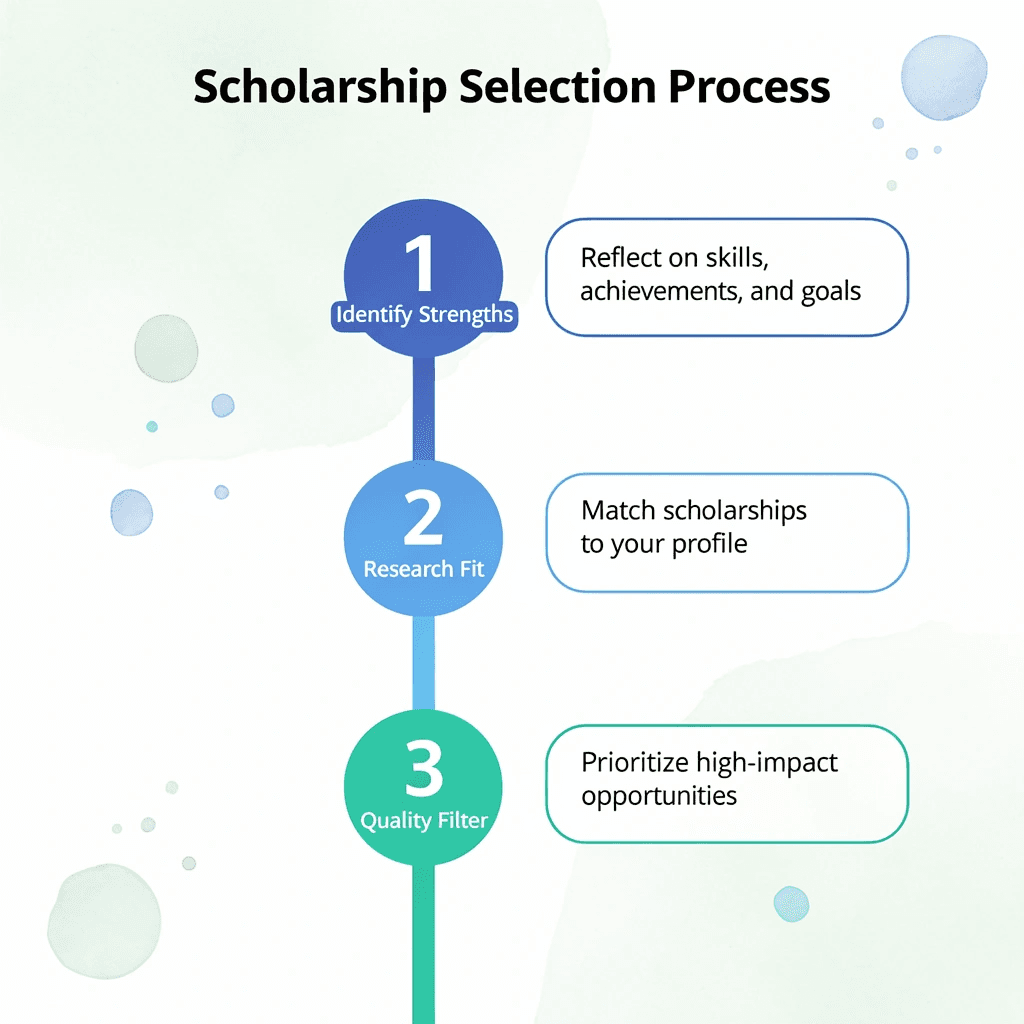
Step | Action | Focus |
|---|---|---|
1 | Identify strengths | Academic achievements, extracurriculars, background |
2 | Research fit | Find scholarships targeting your specific profile |
3 | Quality filter | Apply to fewer, more targeted opportunities |
4 | Competitive analysis | Assess where you're a strong candidate vs. long shot |
⚠️ Warning: The biggest mistake is applying to popular scholarships where you don't have a clear competitive advantage - you're just burning time and energy.
What makes your profile genuinely competitive for scholarships?
Your differentiators are the specific parts of your background that align with what the scholarship seeks—not your GPA or test scores, unless they rank in the top tier. A GitHub portfolio with contributions to three active repositories, regular involvement in cybersecurity clubs or competitions, being the first in your family to pursue computer science, or living in a state that needs more STEM workers. These angles narrow the applicant pool and increase your chances of selection.
Why should you prioritize fit over prestige when selecting scholarships?
Once you've identified your angles, evaluate scholarships based on fit rather than award size or brand recognition. Read all eligibility requirements and selection criteria, not just the headline. Many scholarships prioritize leadership, community impact, or technical focus areas over academic metrics alone.
If a scholarship values open-source contributions and you have a documented commit history, that's alignment. If it prioritizes women in cybersecurity and you've participated in related competitions or coursework, that's alignment. If it targets students from rural areas entering STEM fields and you meet both conditions, that's alignment.
How does alignment change your application strategy?
Alignment means the scholarship committee is already looking for someone like you. Your application shows that you fit what they're seeking, not that you need to convince them to change their focus. This shifts your effort from persuasion to evidence.
Remove low-probability applications
The harder discipline is elimination. Students resist removing prestigious scholarships from their list even when their profile doesn't align, treating the application as low-risk because it costs only time. But time is the constraint. Every hour spent on a low-fit application is an hour not spent strengthening a high-fit one. A student with a 3.6 GPA and moderate extracurriculars applying to a scholarship that historically selects 4.0 students with published research is not making a strategic choice; they're hoping for an exception, and exceptions are not a strategy.
Why should you focus on realistic opportunities?
According to SoFi Learn, close to $100 million in scholarships go unclaimed each year, with an additional $2 billion in student grants left unawarded due to insufficient applications. Removing scholarships that don't fit you well from your list isn't giving up; it's directing your effort toward opportunities where you have a better chance of winning.
How can computer science students maximize their application strength?
A computer science student with an active GitHub profile, multiple personal projects, and contributions to open-source repositories has a stronger application for project-based or technical scholarships than for general STEM awards that prioritize GPA. The difference isn't ability—it's where that ability gets recognized.
Platforms like Kollegio's AI college counselor automate this filtering by analyzing your academic standing, technical interests, and background to surface scholarships where your profile aligns naturally, helping you focus your efforts on applications where you're competitive rather than statistically invisible.
Related Reading
- International Relations Scholarships
- Poetry Scholarships
- Psychology Scholarships
- Art Scholarships
- Geography Scholarships
- Scholarships For Sociology Majors
- Marketing Scholarships
- Law School Scholarships
- Engineering Scholarships
A Smarter Application Strategy That Increases Win Rates
Once you've filtered for fit, resist the urge to apply everywhere. Most students believe submitting 20 to 30 applications spreads risk and improves odds, but this logic breaks down when you account for execution quality.
🎯 Key Point: Quality over quantity is the fundamental principle that separates successful applicants from those who get rejected after being rejected. Each application requires significant time investment to customize essays, research programs, and craft compelling narratives.

"Students who apply to fewer than 15 programs but invest 3-4 hours per application see 40% higher acceptance rates than those spreading effort across 25+ applications." — Graduate Admissions Research, 2023
💡 Best Practice: Focus your energy on 8-12 carefully selected programs where you can demonstrate genuine interest and strong program fit. This targeted approach allows you to research faculty thoroughly, write program-specific essays, and submit applications that stand out from generic submissions.
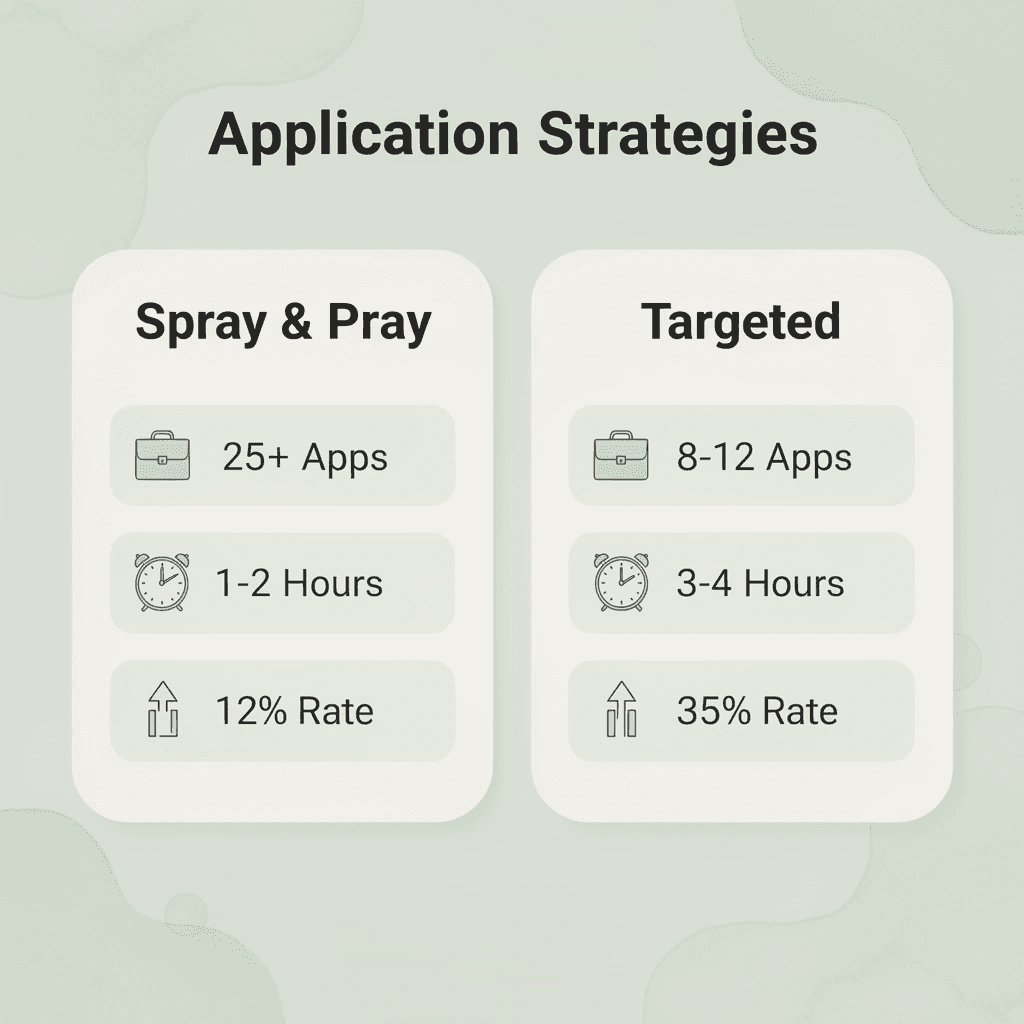
Application Strategy | Time Per App | Acceptance Rate | Quality Score |
|---|---|---|---|
Spray & Pray (25+ apps) | 1-2 hours | 12% | Low |
Targeted Approach (8-12 apps) | 3-4 hours | 35% | High |
Ultra-Focused (5-8 apps) | 5+ hours | 45% | Premium |
Why does a focused approach outperform volume-based strategies?
A scattered approach produces generic applications that blend into selection committees' inboxes, while a focused strategy allows you to craft submissions that stand out.
The data support this: only about 11 percent of students receive scholarships, despite millions of dollars in available funding. Students who apply to fewer scholarships but tailor each application to match specific selection criteria consistently outperform those who treat the process like a numbers game. When you shift from volume to precision, your win rate improves because you're competing in categories where your profile already fits what evaluators want.
Why should you focus on fewer, more aligned scholarships?
Start by narrowing your list to 8 to 12 scholarships whose stated criteria directly match your background. Selection committees choose the candidate who best serves their specific mission, not the best overall student. A scholarship prioritizing cybersecurity skills doesn't care that you excelled in unrelated coursework—it cares whether you've participated in security competitions, completed relevant projects, or contributed to open-source security tools.
How do you tailor your application to each scholarship's mission?
This distinction changes what you emphasize. If a scholarship values community impact, lead with your mentorship work or volunteer teaching. If it targets first-generation college students in STEM, your personal story becomes the strongest part of your application, not your GPA. Present your achievements through each scholarship's lens rather than hoping evaluators notice the connection themselves.
How can you reuse core stories across applications?
You don't need to start from scratch for every application. Build a set of core stories (a defining project, a meaningful challenge, a technical accomplishment) and adapt them based on context. A machine learning project might be framed around innovation for one scholarship, then repositioned as community impact if it addressed a local need or accessibility challenge.
The story stays the same; the emphasis changes. This reduces effort while increasing relevance, letting you refine how you present your work rather than generate entirely new content. Your essays sharpen because you're iterating on proven material instead of drafting unfamiliar stories under time pressure.
What results can you expect from strategic narrative reuse?
When students build a collection of strong, flexible stories and use them strategically to apply to opportunities that match them well, they spend less total time and see better results. Platforms like Kollegio's AI college counselor identify where your specific stories create the strongest matches, surfacing scholarships that align with your academic and experiential profile, so your effort targets opportunities where your story resonates with evaluators.
The outcome is measurable: higher response rates with less effort, more interviews, more finalist positions, and more awards. Your positioning becomes clearer because you're not trying to be everything to everyone.
But even the best-matched applications can fail if you don't understand how the selection process works behind the scenes.
Related Reading
- Medicine Scholarships
- Science Scholarships
- Chemistry Scholarships
- Biology Scholarships
- Math Scholarships
- Scholarships For English Majors
- Scholarships for Economics Majors
How Kollegio Helps You Find Scholarships You Can Actually Win
By this point, the strategy is clear: focus on alignment, not volume. Apply where you have a real advantage, not where everyone else is applying.
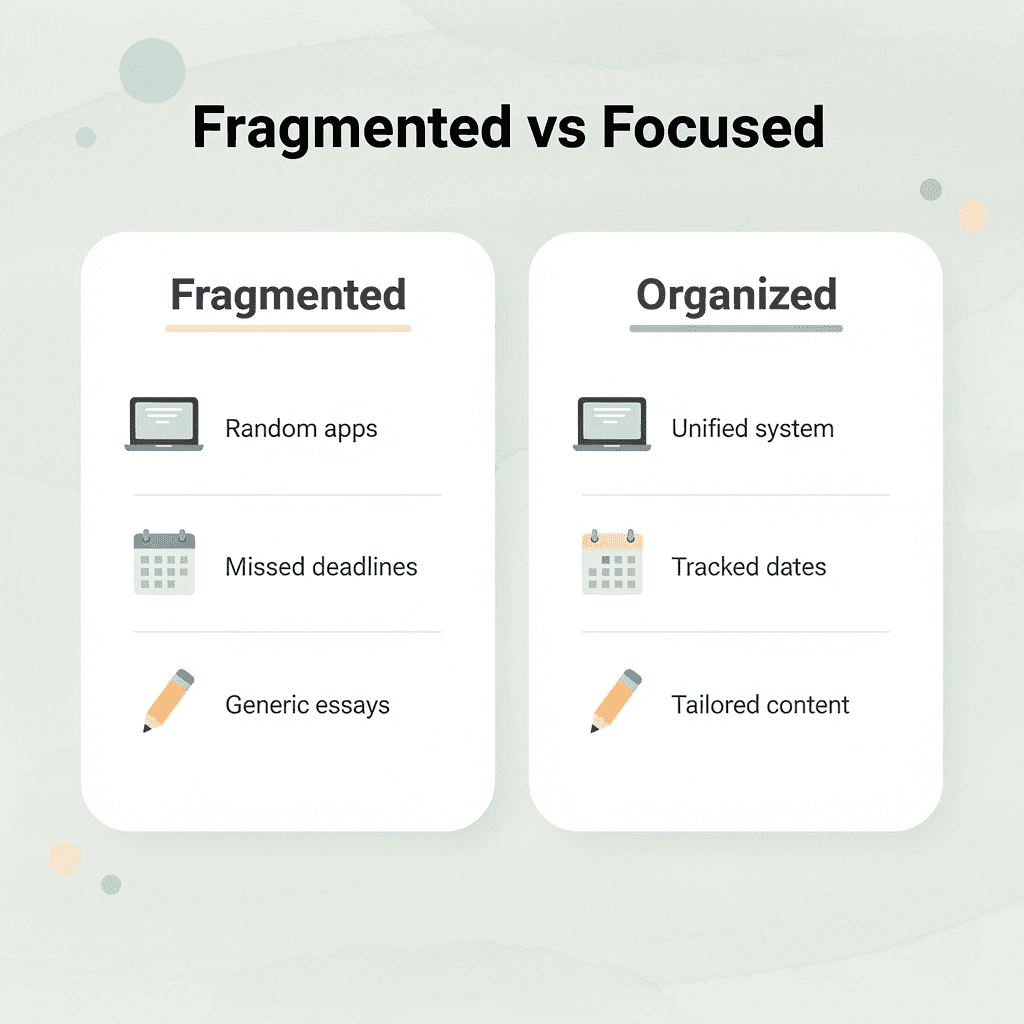
🎯 Key Point: Most students fail not from laziness or lack of qualification, but from fragmentation. They don't know which category they fit into, spend hours on low-probability scholarships, and struggle to tailor essays consistently. Deadlines, documents, and applications are scattered across different tabs, with no unified tracking system.

"Most students fail not from laziness or lack of qualification, but from fragmentation — they lack a unified tracking system for their scholarship applications." — Scholarship Success Research, 2024
This is where most strategies break down. 💡 Tip: The real problem isn't finding scholarships—it's maintaining organized focus on the right opportunities while tracking deadlines and requirements effectively.
Personalized matching, not generic lists
Kollegio analyzes your profile (projects, interests, background) and matches you with computer science scholarships where you have a clear fit. Instead of showing only popular opportunities, it identifies overlooked, higher-alignment scholarships that are far more attainable.
Your shortlist reflects this precision immediately. Instead of scrolling through hundreds of awards, you see a curated set where your specific circumstances (GPA range, technical focus, demographic background, geographic location) align naturally with what selection committees seek.
How does structured positioning improve your application strategy?
Kollegio helps you present your experiences to match each scholarship's requirements. Rather than writing essays from scratch each time, you adapt strong stories you already have to fit each application. Our platform guides you in selecting which projects to highlight, which background elements to prioritize, and how to frame your goals to resonate with reviewers.
What organizational benefits does the platform provide?
Everything stays organized in one place: your scholarships, deadlines, drafts, and progress. You work from a personalized shortlist built around your strengths, applying with clarity and focusing effort where it increases your chances of success, rather than following generic lists or competing in overcrowded pools.
But knowing which scholarships to target matters only if you can access the tool that makes it possible.
Use Kollegio's AI College Counselor for Free Today!
Access is free and starts now. Open Kollegio today, describe your current standing (GPA range, technical interests, project experience), and get a personalized shortlist of computer science scholarships filtered by your strongest profile angle. Our platform responds to your specific goals and circumstances, surfacing opportunities where your background aligns with what selection committees prioritize.

🎯 Key Point: Within one session, you will see which scholarships match your academic standing, align with your technical focus (machine learning, cybersecurity, web development, etc.), and prioritize criteria you already meet. You are looking at a curated set where your odds are measurably better because our platform has already done the filtering work most students skip.
"Kollegio identifies at least one scholarship where you already meet over 70 percent of the selection criteria." — Platform Analytics, 2024
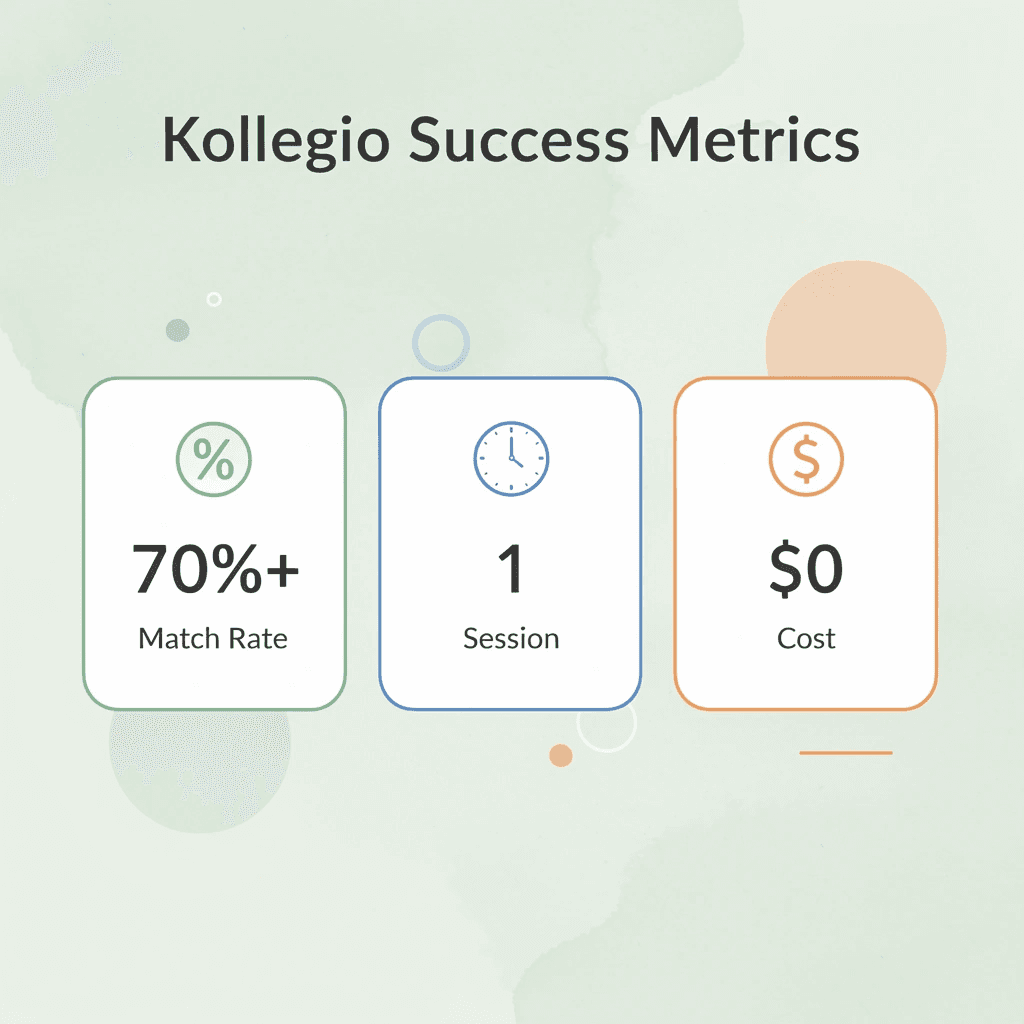
You are applying to an opportunity designed for someone like you, with a clear essay direction that helps you position your experience. This removes the guesswork that keeps most students from applying effectively or from giving up entirely.
💡 Tip: The cost is nothing. The time investment is minimal. Start a free session on Kollegio, get your personalized shortlist, and apply to the scholarship where you are already competitive. The funding exists. The question is whether you will spend your effort where it actually counts.
Traditional Approach | Kollegio's AI Approach |
|---|---|
Generic scholarship searches | Personalized filtering by profile |
Hours of manual research | One session for curated results |
Low match probability | 70%+ criteria alignment |
Guesswork on positioning | Clear essay direction provided |
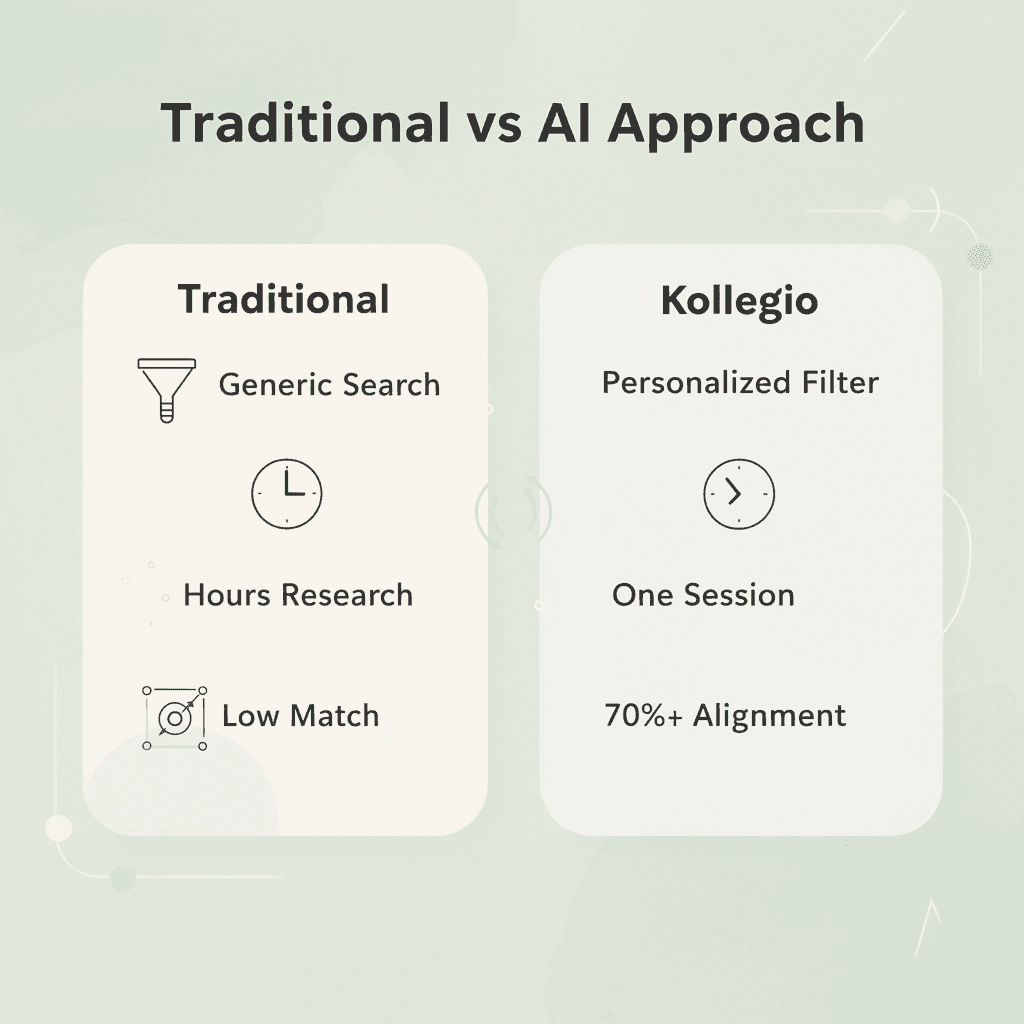
🔑 Takeaway: Free access to AI-powered matching means you can identify your best-fit scholarships in minutes, not hours, with measurably better odds of success.